Key points
- A tarot reading is a tool for reflection, not a way to predict the future.
- Ask open questions, such as “What do I need to know about…?”
- Start with a one-card draw or a three card tarot spread.
- Read the picture first, then the suit, then the number.
- Write every reading in a journal to spot patterns over time.
What is a tarot reading, and what does a tarot reading mean?
How to read tarot cards is easier to learn than you think. You shuffle a deck of tarot cards, ask a question, lay cards in a pattern called a spread, and read them as one story. That is the whole method.
So what does a tarot reading mean? Most modern readers use the cards as a tool for reflection, not prediction. The pictures give you a fresh way to look at a situation. They prompt questions, and the answers come from you.
A tarot deck has 78 cards. The 22 Major Arcana cards, from The Fool to The World, show big life themes. (“Arcana” means “secrets”.) The 56 Minor Arcana cards show everyday events, in four suits of 14: Ace to Ten, plus a Page, Knight, Queen and King. In tarot tradition, each suit has its own area of life:
- Cups: feelings and relationships (water)
- Wands: energy and new ideas (fire)
- Swords: thoughts, words and conflict (air)
- Pentacles: work, money and home (earth)
Learn these four lines and 56 cards already make sense.
How do you ask the tarot cards a question?
Ask open questions that start with “what” or “how”:
- “What do I need to know about my new job?”
- “What can I do about the row with my sister?”
Skip yes or no questions. They rarely give a clear answer, and you learn little from them. Skip questions about other people's private choices too, such as “Is my ex seeing someone?” Keep yourself at the centre of the question.
Write your question down before you shuffle. It stops the question drifting halfway through. When you read tarot for yourself, this matters even more: it is easy to bend the question to fit the cards you like.
How do you shuffle and lay out tarot cards?
There is no wrong way to shuffle. Pick what feels easy:
- Overhand shuffle: hold the deck in one hand and drop small packs of cards into the other.
- Table shuffle: spread the cards face down and swirl them with both hands. This also turns some cards upside down, which readers call reversed.
Shuffle while you think about your question. Then cut the deck into three piles and stack them back in any order. Draw from the top. Lay each card face down in its place, then turn them over one by one.
A tarot reading cloth gives you a clean, soft surface and keeps cards off a sticky table. Our Tarot Reading Cloth 75 x 75 cm (£4.49) comes in Zodiac, Ancient Witch or Tree of Life designs, and works for oracle, pendulum and rune work too. To keep a card in view after the reading, use the Natural Past Present Future Tarot Card Stand (£8.49), with past, present and future marked on the design.
Choose your cloth design and set up your reading space today.
 3 designs
 Same-day dispatch
Which tarot spreads should beginners use?
A spread is a set pattern for laying out cards. Each position has its own meaning. Start small.
One-card daily draw. Pull one card each morning and ask, “What do I need to know today?” It is the fastest way to learn all 78 cards.
Three card tarot spread. Lay three cards in a row. Read them as past, present and next step, or as situation, challenge and advice.
Five-card cross. Put the situation in the centre, what lies behind you on the left, what comes next on the right, advice above and the root of the matter below.
Celtic Cross spread. The best-known spread, with ten cards. A. E. Waite described it in his 1910 book The Pictorial Key to the Tarot. Six cards form a cross: the situation, the challenge crossing it, the root, the recent past, your aim and what comes next. Four more stand in a line beside it: you, the people around you, your hopes and fears, and the outcome. Read the outcome as the direction things are taking now, not a fixed result.
Master three cards first, then try the Celtic Cross.
How do you read the cards in a tarot spread?
Use this simple order for every card:
- Picture first. Look before you open the guidebook. Who looks happy, worried or busy? Your first reaction counts.
- Then the suit. It tells you the area of life.
- Then the number. In tarot tradition, Aces stand for beginnings and Tens for completion.
Court cards often stand for people in your life, or for a way of acting, such as the calm care of the Queen of Cups. If one spread holds many Major Arcana cards, tradition says the reading points to bigger themes.
What about reversed tarot cards? Some readers read an upside-down card as the card's energy blocked or turned inward. Many beginners leave reversals out and turn every card upright. Both ways work. Pick one and stick to it. Every card's upright and reversed meaning is in our tarot card meanings guide, all 78 in one place.
Now link the cards into a story. Ask how the first card leads to the second, and what the last card adds. The Five of Cups beside the Six of Cups, for example, might read as a loss followed by warm memories.
Finally, write it down: the date, the question, the cards and your thoughts. Read old entries a month later and you will spot patterns.
Which tarot deck should you read with?
Any 78-card deck works for every spread in this guide. Still choosing? Read our guide to choosing your first tarot deck for the full rundown. Here are three decks we like for learning to read.
The 78-Card Tarot Deck, Four Designs (£8.99) is a smart first deck. Choose Traditional, Goddess or Requiem Arcana, each with a guidebook, or the Golden deck in gold foil. Requiem Arcana has artwork by Vera Petruk.
The Light Seer's Tarot Cards (£26.49) by Chris-Anne Donnelly is a modern deck that explores light and darkness, with a guidebook in an illustrated box. Its artwork suits the picture-first method.
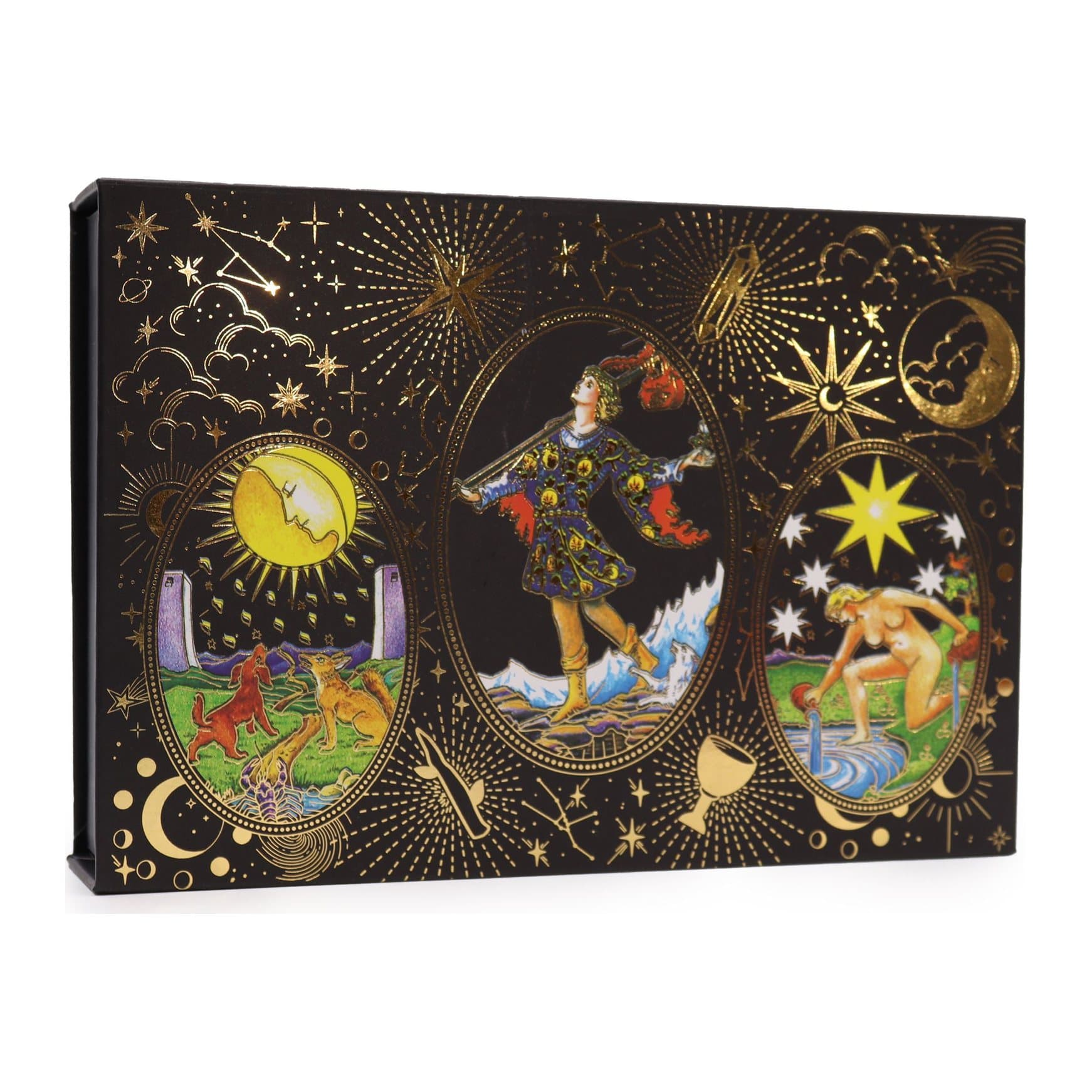
The Gold Foil Tarot Deck Gift Box with Guidebook (£22.49) holds a 78-card gold foil deck in a black and gold magnetic box. The cardstock shuffles smoothly, and the guidebook suits beginners and experienced readers alike.
Pick the deck whose pictures you want to see every day, and order it today.
 4 designs
 Same-day dispatch

How do you care for and cleanse a tarot deck?
Wrap your deck in a cloth or keep it in a box. Store it somewhere dry and out of direct sun, so the colours stay bright and the cards stay flat.
Many readers also use a small cleansing ritual with a new deck, or when they want a fresh start. These are reading traditions, handed down from reader to reader. Popular ones include:
- Putting the deck back in order, starting from The Fool
- Knocking on the deck
- Resting a clear quartz stone on top overnight
- Passing the cards through incense smoke
Clear quartz, also called rock crystal, is traditionally associated with clarity in crystal lore.
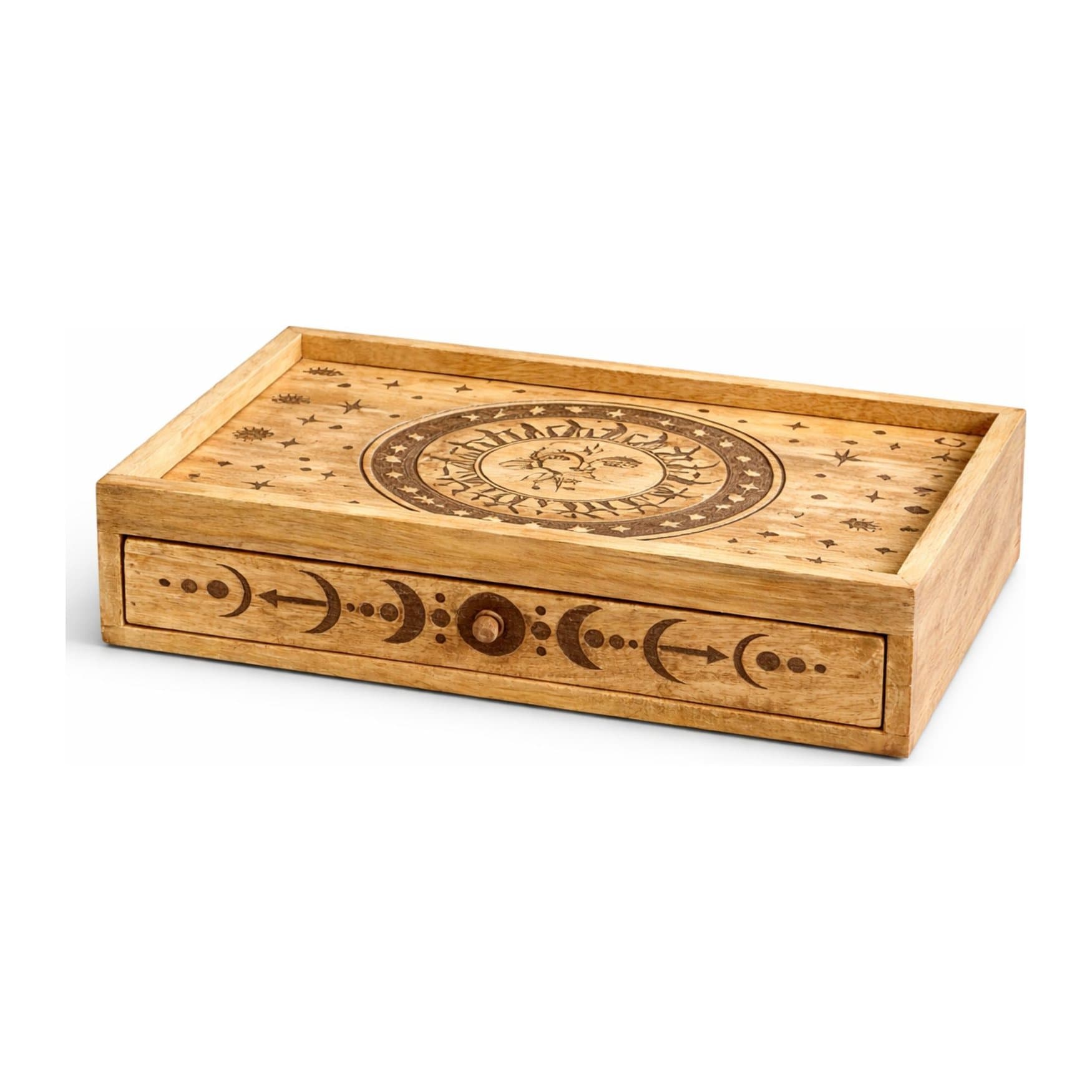
The Mango Wood Tarot Box with Card Holder (from £6.99) stores your deck and has an upright card holder for readings. It comes in six styles, up to a carved sun and moon box with a drawer. The Medium Rock Crystal Tumble Stones, Pack of 24 (£17.99) give you Grade A stones to rest on every deck you own. Keep spares in Velvet Drawstring Pouches, Pack of 5 (£4.99), in red, purple, black or ivory.
Give your deck a proper home: choose your tarot box today.
 6 designs
 4 colours

What should you pair with your tarot cards?
Four simple tools make every reading easier: a reading cloth, a card stand for your daily card, a box for the deck and a journal for your notes. The journal matters most.
The Moon Vintage Tarot A5 Notebook (£7.49) has 200 lined pages with gold edges and a vintage The Moon card on the cover. That is room for a lot of readings.
Want it all in one box? The Gold Foil Tarot Gift Set (£47.49) holds a 78-card gold foil deck, guidebook, storage pouch, celestial tarot cloth, two card stands, a ritual bell, divination stones and feather quills.
Ready for a second deck? The Tarot de Marseille Pastel Tarot Cards (£13.99) follow Paul Marteau's 1930 design in a pastel palette, with an interactive digital guide inspired by Jungian psychology. In Marseille tradition, the number cards show patterns of suit symbols rather than full scenes, which puts your suit and number skills to work. For shorter, simpler messages, try oracle cards alongside your tarot.
The Moon notebook, the past, present and future card stand, The Light Seer's Tarot and the Marseille deck are marked for same-day dispatch: order by noon, Monday to Friday, and they leave the same working day. Every order goes by tracked UK delivery, with 14-day returns.
Pick your deck, grab a notebook and lay your first three card tarot spread this week. Shop tarot cards now.