
Key points
- An altar is a table or shelf set aside for ritual, prayer or reflection.
- In Wicca, altar tools traditionally stand for earth, air, fire and water.
- A cloth, a candle, a bowl and one meaningful object make a first altar.
- The classic Wiccan altar tools are the pentacle, cauldron, chalice and athame, but none is required to start.
- Never leave a candle or burning herb unattended, and use a heatproof dish.
What is an altar, and what does an altar mean in witchcraft?
An altar is a table, shelf or other flat surface set aside for ritual, prayer or reflection. The word comes from the Latin altare, linked with altus, meaning "high", because altars were often raised above the ground.
Browse our altar tools for altar cloths, bells, offering bowls, chalices and cauldrons, each with its size and material on the page.
In witchcraft, an altar is the working centre of your practice. It is where you light candles, lay out tools, read tarot and mark the seasons. In Wicca, a living pagan religion founded in England in the 20th century, the altar traditionally holds tools for the four elements: earth, air, fire and water. Many Wiccans also honour the Goddess and the God there, often with one candle for each.
There is no single correct altar. Common kinds include:
- Working altar: a surface for spellwork, candle magic and ritual.
- Devotional altar: a space to honour a deity, saint or spirit, with images and offerings.
- Ancestor altar: photos, keepsakes and candles for loved ones who have died, a common sight at Samhain (31 October).
- Seasonal altar: flowers, leaves and colours that change with the Wheel of the Year, the pagan cycle of eight seasonal festivals called sabbats.
Size does not matter. A windowsill, a bookshelf or a tray you put away after use all count. Many people start small and add one tool at a time.
Any day is a good day to start, and Samhain on 31 October is a favourite. See our altar tools and pick your first piece today.
What do you need for a witchcraft altar? (the basic altar tools)
You need far less than you might think. A cloth, a candle, a bowl and one object that means something to you make a complete first altar.
The basic altar tools:
- Altar cloth. It marks the space as special and keeps wax and ash off your furniture. Our Esoteric Fringed Altar Cloth 50 x 50 cm (£4.49) is cotton with a fringed border, in six designs including Moon & Sun Chart, Pentagon and Earth Mother.
- Candles. They stand for the element of fire. Many altars hold two, one for the Goddess and one for the God. The Black Pentagram Taper Candles, Set of 3 (£9.49) are black paraffin tapers. A taper is a tall, slim candle that stands in a holder.
- Offering bowl. It holds herbs, resins, salt, water or small offerings such as flowers or bread. The Wooden Ritual Offerings Bowl Pentagram (from £8.49) comes in 11x7cm or 13x7cm. Wipe it clean with a dry cloth.
- Incense. Smoke stands for air. Burn sticks or cones in a holder, or loose resin in a heatproof dish.
- A focus object. A crystal, a tarot card, a photo or a stone you found on a walk.
A pentagram, the design on the candles and bowl, is a five-pointed star. In Wicca its points are linked with earth, air, fire, water and spirit.
Set candles in stable holders, keep flames well clear of the cloth's fringe and never leave a lit candle unattended.
The tapers leave the same working day when you order by noon, Monday to Friday. Find more cloths, candles and bowls in our witchcraft supplies.
 6 designs
 Same-day dispatch
 2 designs
How do you set up an altar, step by step?
Setting up an altar takes about half an hour and needs no special skill. Follow these steps, then make it your own.
- Choose the spot. Pick a stable, flat surface in a quiet corner, away from curtains, draughts, pets and small children. Some traditions face the altar north, linked with earth; others face east, towards the sunrise.
- Clear and clean it. Dust the surface and remove anything that doesn't belong. Many people add a short cleansing ritual.
- Lay the cloth. Smooth it flat so candles stand level.
- Place the four elements. A common Wiccan layout puts earth in the north (a dish of salt or stones), air in the east (incense or a wand), fire in the south (a candle) and water in the west (a cup, chalice or shell).
- Add your centre. Many Wiccans set a Goddess candle or figure on the left and a God candle on the right, with your focus object between them.
- Mark the season. Our Wheel of the Year Altar Cards with Stand (£9.49) are eight paper cards, one for each sabbat, with a natural wooden stand. Show the sabbat you are in, then swap as the year turns.
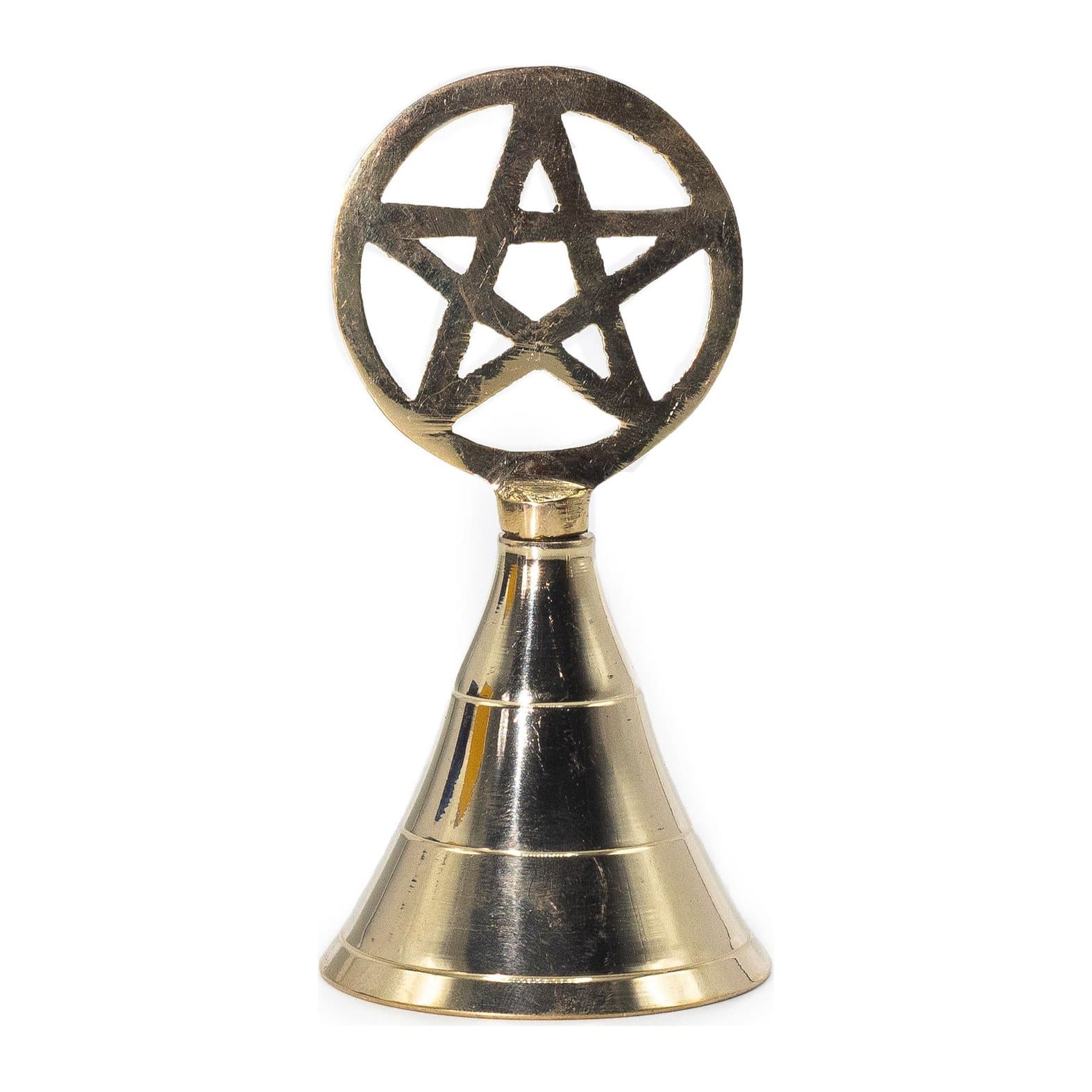
- Open and close with sound. Many people ring a bell to mark the start and end of a ritual. The Pentagram Altar Brass Bell 10.5 cm (£13.49) is solid, polished brass topped with an openwork pentagram.
The altar cards leave the same working day when you order by noon, Monday to Friday.
 Same-day dispatch
 Same-day dispatch
How do you choose altar tools (cauldron, athame, chalice, pentacle)?
Choose each tool by the element it stands for, its material and the room you have.
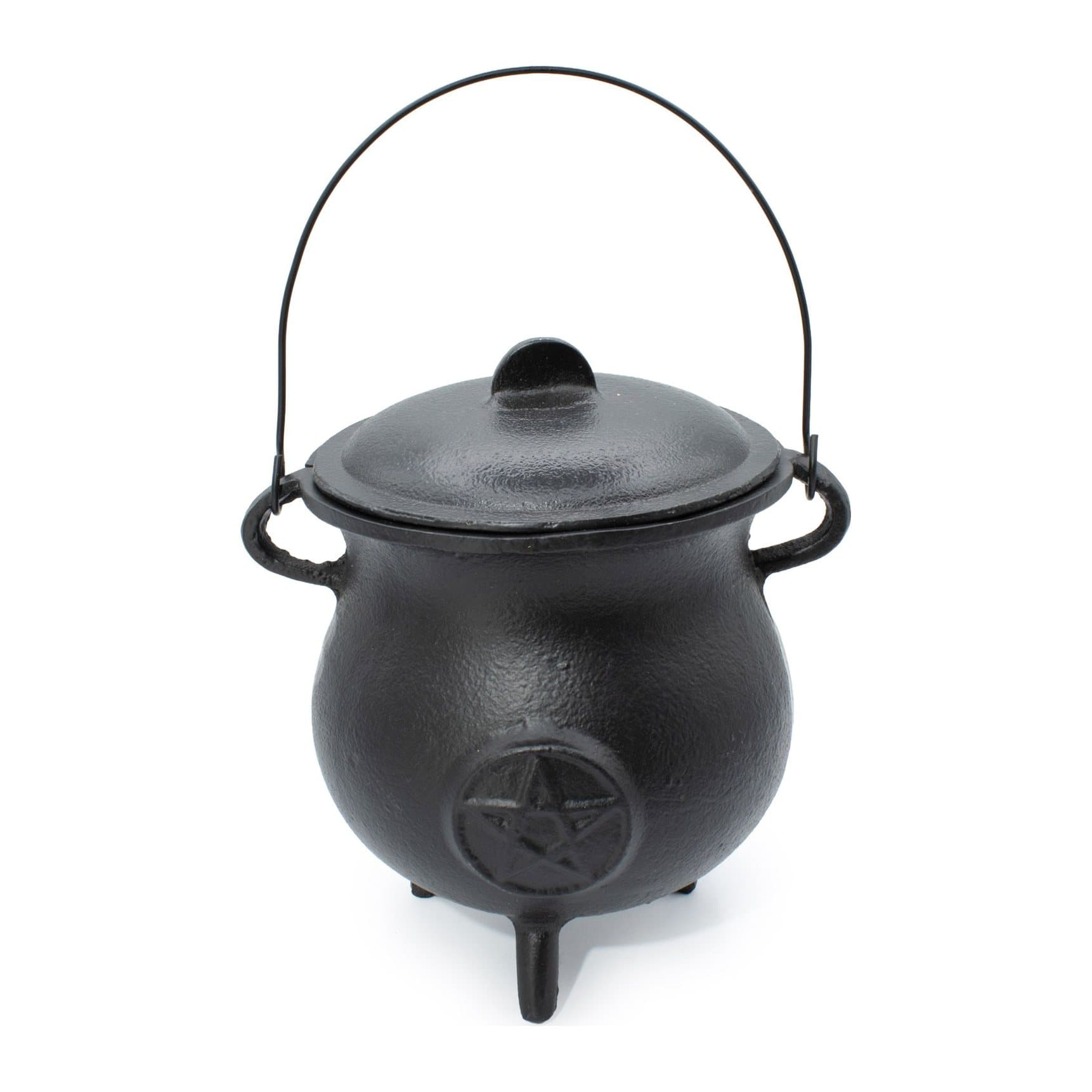
- Cauldron. A cauldron is a round, three-legged iron pot, traditionally linked with the Goddess, rebirth and change. It is used to burn incense, herbs or charcoal. Our Huge Cast Iron Pentagram Cauldron 23 x 18 cm (£64.49) weighs at least 4 kg, with a fitted lid, a handle and a pentagram detail. Cast iron gets very hot, so stand it on a heatproof mat and let it cool before moving it. Our cauldron meaning guide covers seasoning and safe burning.
- Athame. An athame is a ritual knife, used to direct energy, never to cut. It traditionally has a black handle and a double-edged blade, and is linked with fire or air, depending on the tradition.
- Chalice. A chalice is a ritual cup for water, wine or juice, linked with water and the Goddess. In Wicca, lowering the athame into the chalice symbolises the union of the God and Goddess. The Wild Thirst Medieval Wolf Chalice 20 cm (£16.99) is bronze-coloured resin with wolf-head crests and a stainless steel insert.
- Pentacle. A pentacle is a flat disc or tile carved with a pentagram inside a circle. It sits at the centre of many altars, stands for earth and is used as a base for blessing tools.
Many witches add a wand, used to direct energy when casting a circle, which means marking out a sacred space for ritual. The Man of the Wood Resin Wand 24 cm (£9.49) shows the Green Man, the leafy face of old folklore, among twisting branches. A besom is a ritual broom, and you will find more wands in our witchcraft range.
Each tool page lists size and material, so you know what arrives. Pick yours from our altar tools.
 Same-day dispatch
 3 designs
How do you cleanse and care for your altar, and what do you pair with it?
Care for your altar in two ways: keep it physically clean, and refresh it with a regular cleansing ritual. Cleansing is a short ritual to refresh a space or tools.
Everyday care:
- Let ash and wax cool fully before you clear them. Chill dripped wax, then lift it off the cloth.
- Wipe the wooden bowl with a dry cloth.
- Keep rose quartz, amethyst and other coloured stones out of strong sun, as they can fade.
A cleansing ritual can be simple: ring the bell, pass tools through incense smoke, or burn a white sage bundle over a heatproof dish. Our sage meaning guide explains the tradition, and our incense range includes white sage bundles. Open a window, keep flames away from cloth and never leave anything burning unattended.
Pairings that suit an altar:
- Spell candles. Candle magic means lighting a small candle of a chosen colour while you set an intention. The Moon Magic Spell Candle Kit (£6.49) holds 12 white unscented spell candles and a wooden holder. Burn each for no more than one hour at a time. See more spell candles.
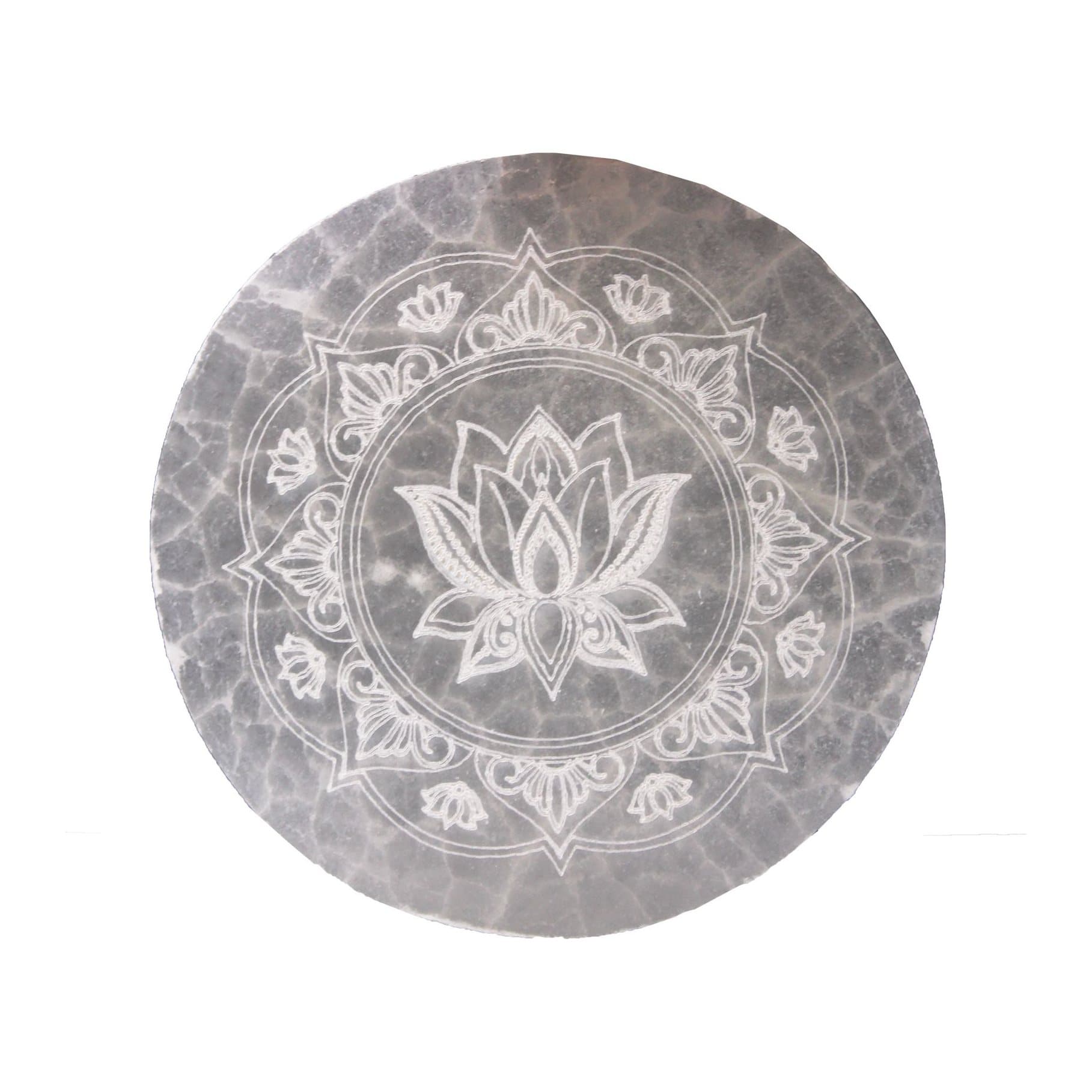
- Crystals. In crystal practice, a charging plate is a slab that stones rest on between uses. The Selenite Charging Plate Mandala (from £7.49) comes as a 10 cm lotus, a 15 cm flat bar or an 8 cm design. Selenite is soft, so keep it dry.
Many people refresh their altar at each full moon. Spend over £60 and we pay the first £6 of delivery, and every order has 14-day returns. Browse our altar tools and build yours today.
 3 designs
 Same-day dispatch
 Same-day dispatch