Key points
- A cauldron is a large pot once used over an open fire, and in witchcraft it is a symbol of the goddess, transformation and the element of water.
- Celtic myth gives us Cerridwen's cauldron of wisdom and inspiration and the Dagda's cauldron that never runs empty.
- Witches use a cast iron cauldron to burn resin on charcoal discs over sand, to burn written intentions and as an altar centrepiece.
- Only a real cast iron cauldron is a burning vessel, while resin and ceramic cauldron shapes are holders and burners used as designed.
- Season cast iron with a thin coat of vegetable oil, keep it dry, and always burn on a heatproof mat with the cauldron in sight.
What does a cauldron mean?
A cauldron is a large metal pot made to stand or hang over an open fire. In witchcraft it is a symbol of the goddess, the womb, transformation and the element of water. Witches today use one to burn resin, herbs and written intentions, and as the centrepiece of an altar.
Browse our witchcraft supplies to see every cauldron we stock, from a heavy cast iron cauldron to small cauldron-shaped holders. Ours are for ritual, burning and décor, never for cooking or food.
Where the word comes from
The word comes from Latin calidus, meaning hot, and reached English through Old French. For centuries a cauldron was simply the cooking pot on the hearth.
The cauldron in Celtic myth
- Cerridwen's cauldron: in Welsh legend, Cerridwen brews a potion of wisdom and inspiration in her cauldron. The story ends with the birth of the poet Taliesin.
- The Dagda's cauldron: in Irish myth, the Dagda, a father figure among the gods, owns a cauldron that never runs empty.
The cauldron in Wicca
Wicca is a modern pagan religion, popularised in England by Gerald Gardner in the 1950s. In Wicca the cauldron is linked to the goddess. Its round, open shape stands for the womb and rebirth: what goes in comes out changed.
That is why many witches keep a cauldron on the altar even when nothing is burning. The Familiar Cauldron Black Cat Candle Holder (£18.99) is 12.5 cm of resin, with three cats round a cauldron and a tealight at its centre: a fine piece for a gothic altar. The Herbal Magic Terracotta Cauldron Plant Pot (£11.99), with its bronze-effect finish, suits witches who grow their own herbs.

 Same-day dispatch
How do witches use a cauldron?
Witches use a cast iron cauldron in a few simple ways:
- Burning resin: resin incense is dried tree sap, such as amber or myrrh. You burn it on a charcoal disc, a small round block of charcoal made for incense. Put a layer of sand in the cauldron, set the disc on top, light it and add resin once the edges turn grey.
- Burning herbs: dried herbs go on the charcoal in the same way.
- Burning written intentions: many witches write a goal on a slip of paper and burn it. In witchcraft tradition, the flame stands for change and letting go.
- Holding water or salt: with no flame at all, it can hold water for the element of water, or salt for earth.
- An altar centrepiece: set in the middle of the altar, it represents the goddess. Our guide on how to set up an altar shows where it sits.
- Samhain: Samhain (said 'sow-in') is the pagan festival on 31 October that marks the end of the harvest. Many witches give the cauldron pride of place on the Samhain altar.
Cauldron shapes for everyday scent
Not every cauldron is for open burning. For a daily scent, these cauldron-shaped pieces are used as designed:
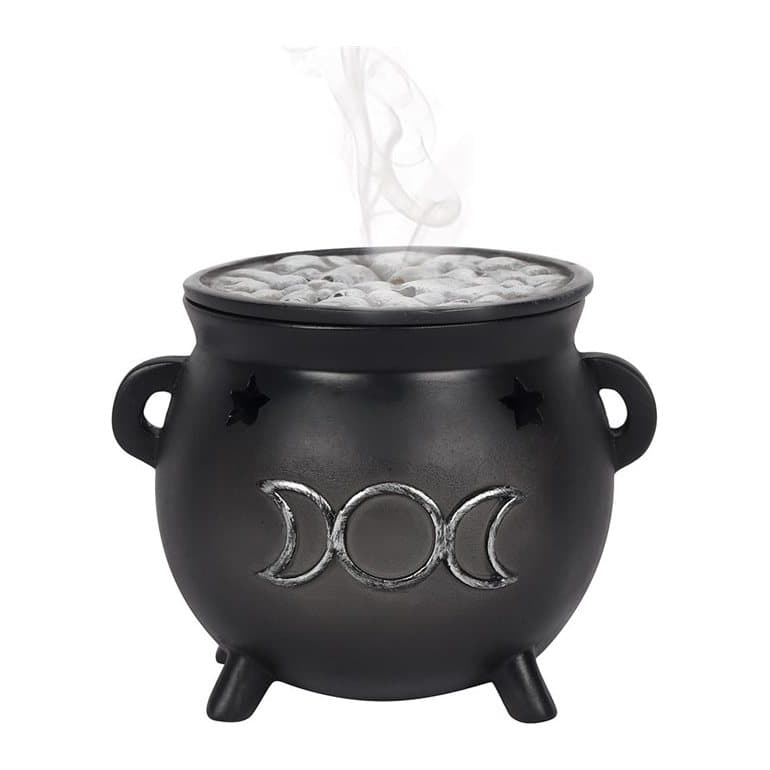
- Triple Moon Cauldron Incense Cone Holder (£6.49): resin, 8 cm tall, with cutout stars and a removable bubbling brew top.
- Pouring Cauldrons Backflow Incense Holder (£20.49): resin, 15 cm tall, with a light that runs on 2 AA batteries. A backflow cone is an incense cone with a hollow base, so the smoke flows downwards. Here it pours between the cauldrons.
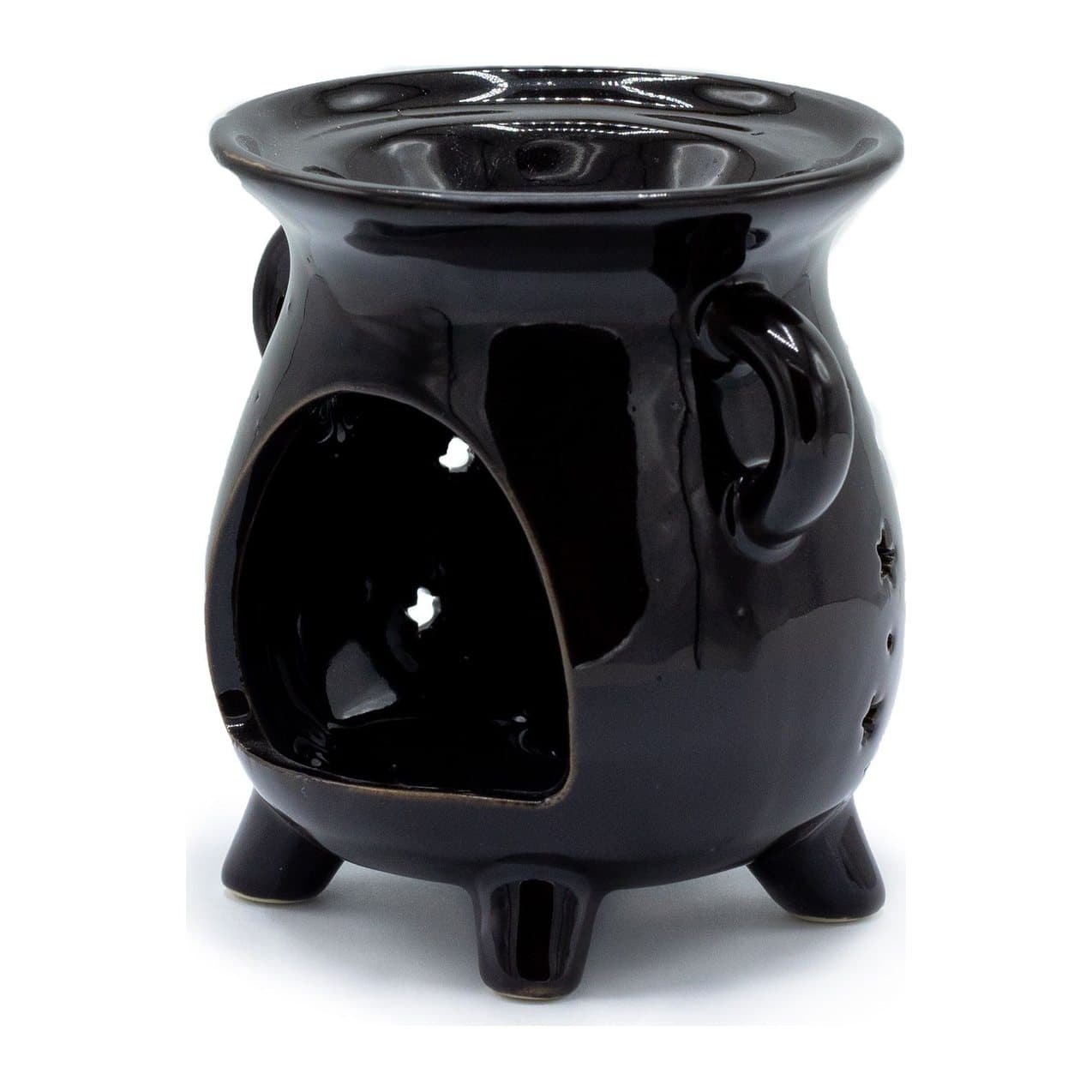
- Moon Phase Cauldron Oil Burner (£5.99): ceramic, in black or white. An oil burner is a dish that warms fragrance oil over a tealight.
 Same-day dispatch
 Same-day dispatch
 2 colours
How do you choose a cauldron?
Start with one question: will you burn things in it? If yes, you need real cast iron. If you want scent, décor or a gift, a cauldron-shaped holder or burner is the better fit.
For burning: cast iron
Cast iron is a heavy iron that takes heat slowly and holds it well. Look for:
- Weight: a heavy pot sits steady.
- A lid: keeps dust out between rituals.
- Legs: three legs lift the hot base off the surface below.
- Size: room for sand, a charcoal disc and a slip of paper without crowding.
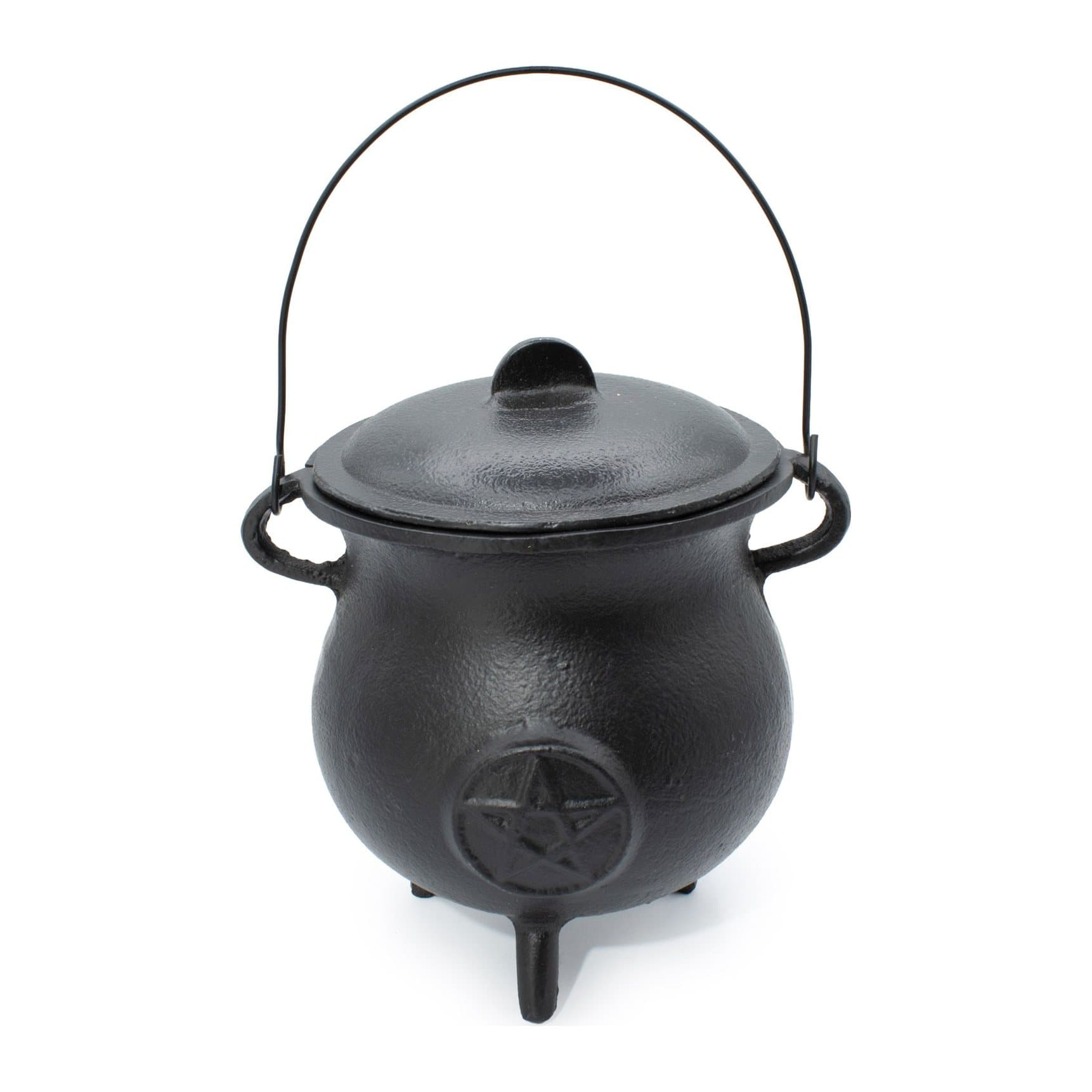
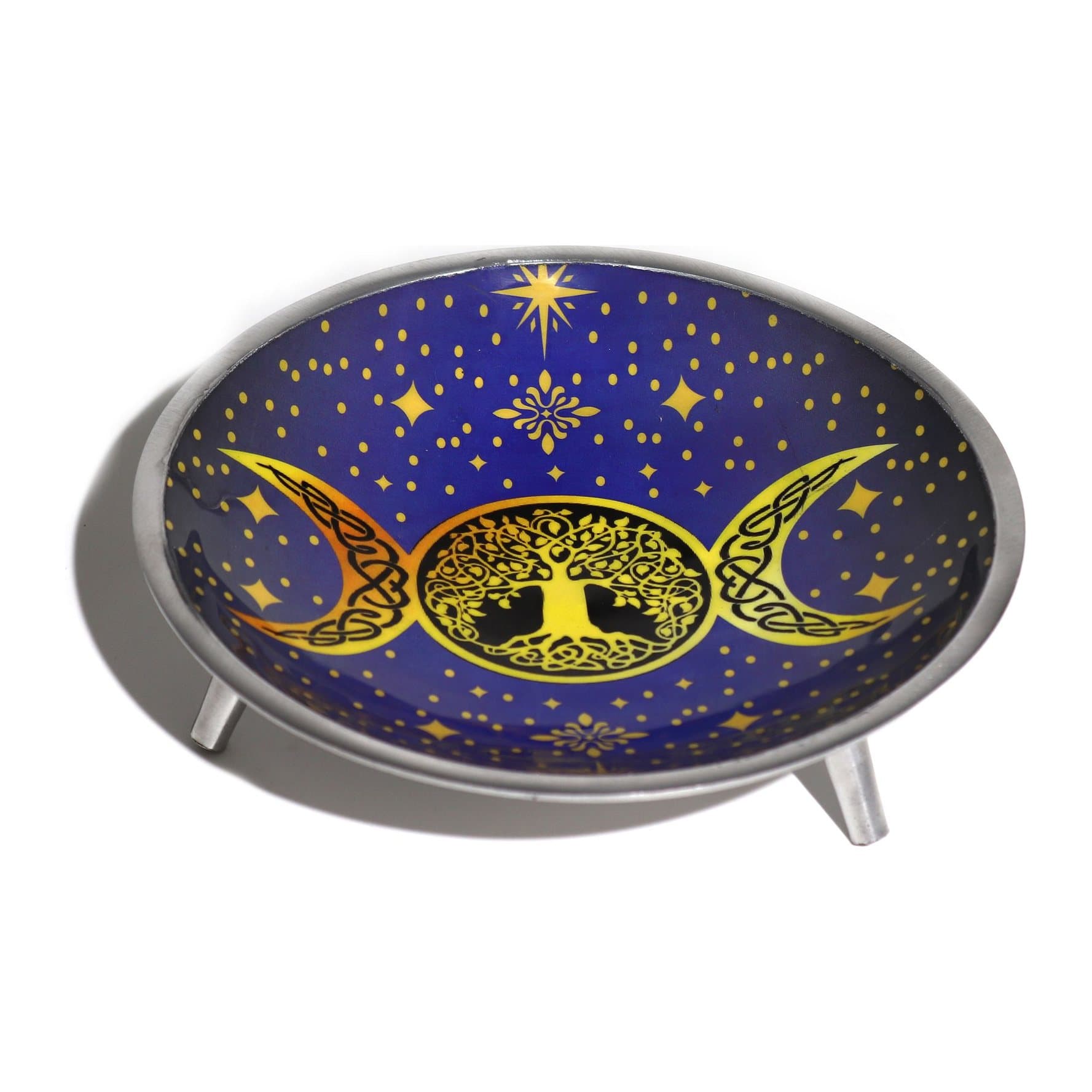
The Huge Cast Iron Pentagram Cauldron 23 x 18 cm (£64.49) ticks every box: cast iron, at least 4 kg, with a fitted lid, a handle and three legs. Its pentagram, a five-pointed star, is a symbol widely used in Wicca. The Triple Moon Ritual Vessels (from £8.49) range includes a cast iron cauldron, also 23 x 18 cm and at least 4 kg, plus smaller pieces such as an enamelled offering plate and a copper ritual bowl.
Be clear on what burns
Only the cast iron cauldrons are burning vessels. The resin holders take incense cones. The ceramic burners take fragrance oil or wax melts. Use each one as designed, never as a pot for charcoal.
For scent, décor and gifts
- Cauldron Oil Burner (£7.49): black ceramic, 10 cm tall, with a cut-out star detail.
- Hanging Cauldron Oil Burner Witches Brew (£9.49): matte black ceramic on a metal stand, with a cut-out triple moon. Do not overfill it, and stand it on a heat-resistant surface.
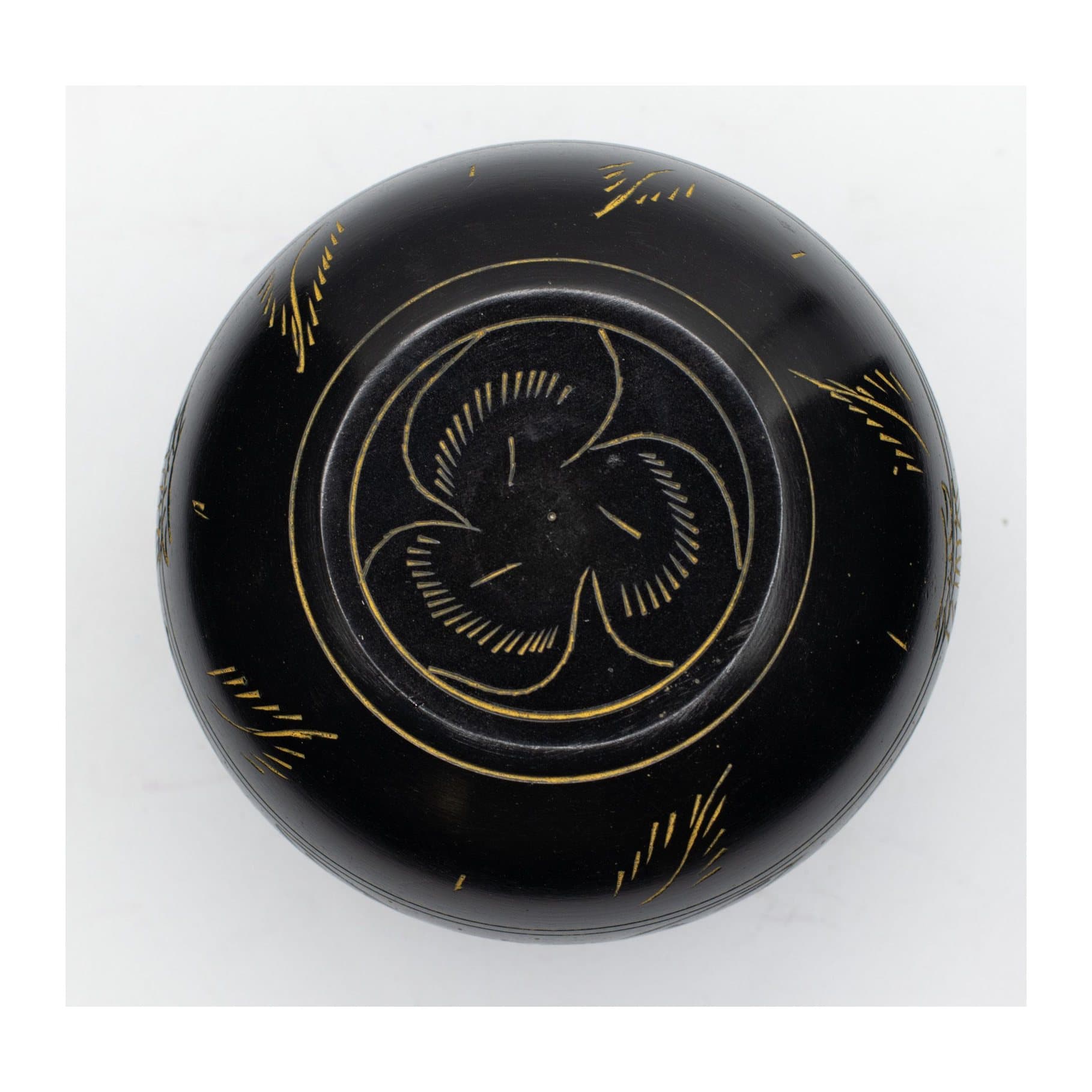
- Cauldron Singing Bowl Magic Mushroom (£32.99): aluminium, 15 x 15 x 15 cm, in yellow, blue or green, for meditation and altars. A singing bowl is a bowl you play by striking it or circling its rim, which makes a ringing tone.
 6 designs
 3 colours
How do you season, cleanse and care for a cast iron cauldron?
A cast iron cauldron lasts for years with a little care. The one thing it hates is being left wet.
How to season a cast iron cauldron
Seasoning means baking a thin layer of oil onto bare cast iron, so it forms a hard, dark coating that keeps rust at bay. Do it before first use:
- Wash the cauldron in warm water.
- Dry it fully, inside and out.
- Rub a thin coat of vegetable oil all over with kitchen paper, then wipe off any excess.
- Warm it in the oven.
- Turn the oven off and let the cauldron cool inside.
Everyday care
- Cast iron rusts if left wet. Dry it straight after every wash and re-oil it now and then.
- Never pour cold water into a hot cauldron: the sudden change can crack the iron.
- Wait until it is completely cold before you tip out ash and spent charcoal.
Cleansing a new cauldron
Many witches cleanse a new cauldron before its first ritual. In witchcraft tradition, that might mean setting it on a windowsill under the moonlight, or passing it through incense smoke. A cleansing ritual is a simple act that marks an everyday object as a sacred tool.
Safety every time you burn
- Stand it on a heatproof mat.
- Keep a layer of sand in the base under the charcoal.
- Use a cauldron with legs, so the hot base stays off the surface.
- Never leave burning charcoal or paper alone.
- Open a window for ventilation.
- The handle and lid get hot: use an oven glove.
- Keep children and pets well away.
- Hold charcoal discs with tongs, never your fingers.
What do you pair with a cauldron?
A cauldron on its own is a symbol. Add a few basics and it becomes an active part of your practice. Here is what to keep beside it:
- Charcoal discs: the Set of 100 Charcoal Discs for Incense (£9.49) comes in rolls of ten, for resins, powdered herbal blends and loose incense. Place each disc in a fireproof vessel before you light it.
- Resin incense: the Resin Incense for Charcoal Discs 50g Tub (from £4.49) comes in amber, myrrh or guggal. Add a few pieces once the charcoal goes grey at the edges. Browse more resins and cones in incense.
- Sand: a layer of plain sand in the base helps absorb heat.
- A white sage bundle: dried sage tied in a bundle, used in cleansing rituals. Our guide to sage meaning explains the tradition.
- An altar cloth: a cloth that marks out your altar space and catches stray ash.
- Spell candles: small candles in set colours, each traditionally linked with a theme. A green spell candle, for example, is used in money and abundance rituals. Find them in candles.
New to the craft? Our guide to witchcraft meaning covers the basics, from Wicca to the tools on the altar.
Ready to choose yours? Browse every cauldron, cast iron cauldron and witches cauldron in our witchcraft supplies. Every order comes with tracked UK delivery by Royal Mail or courier and 14-day returns, so you can pick your cauldron with confidence.
 Same-day dispatch
 3 designs