Key points
- A tarot deck has 78 cards: 22 Major Arcana for big life themes and 56 Minor Arcana for everyday life.
- The four suits each cover one area of life: Cups for feelings, Wands for action, Swords for thoughts, Pentacles for work and money.
- Learn the numbers (Ace to Ten) and the four court cards, and you can read most of the Minor Arcana from their pattern.
- A reversed card is one that lands upside down. Reading reversals is optional, and many beginners start with upright meanings only.
- Tarot is a tool for reflection, not prediction. The meanings here are the traditional Rider-Waite meanings that most guidebooks follow.
What do tarot cards mean?
In tarot tradition, each card stands for a theme in life, such as a new start, a hard choice, love or change, and that theme is the card's traditional meaning. A full tarot deck has 78 cards, and every one has an upright and a reversed meaning. This guide gives you all of them in plain English.
To learn the meanings, you need a full deck in your hands. We sell full 78-card tarot cards decks with guidebooks, so you can check every picture against this guide. A simple place to start is the 78-Card Tarot Deck, Four Designs (£8.99): choose Traditional, Goddess or Requiem Arcana and you get a guidebook with it. If you want a gift, the Gold Foil Tarot Deck Gift Box with Guidebook (£22.49) holds a 78-card gold foil deck and a guidebook in a black and gold magnetic box.
The deck splits into two parts:
- The Major Arcana: 22 cards, from The Fool to The World. They stand for the big themes and turning points in life.
- The Minor Arcana: 56 cards for everyday life, split into four suits (families of cards). Each suit has Ace to Ten plus four court cards: Page, Knight, Queen and King.
| Suit | Area of life |
|---|---|
| Cups | Feelings and relationships |
| Wands | Energy, ideas and action |
| Swords | Thoughts, words and decisions |
| Pentacles | Work, money, home and everyday life |
An upright card lands the right way up and shows the card's main meaning. A reversed card lands upside down, and readers often see its meaning as blocked, turned inward or out of balance.
The meanings below are the traditional Rider-Waite meanings. They come from the 1909 deck by Pamela Colman Smith and Arthur Edward Waite, and they are the meanings most beginner books teach. Tarot is a tool for reflection, not prediction: the cards help you think about your life, they do not tell you what will happen.
The full list of all 78 tarot card meanings follows, upright and reversed.
 4 designs

What do the Major Arcana cards mean?
The Major Arcana are the 22 big cards in a tarot deck, numbered 0 to 21. In tarot tradition they stand for big life themes and turning points, while the 56 Minor Arcana cards cover everyday life. Readers often see the Major Arcana as the Fool's journey: one traveller meeting each lesson in turn, from The Fool to The World.
Here is the traditional meaning of every Major Arcana card, upright and reversed. A reversed card is one that lands upside down, and many readers give it a different meaning.
| Card | Upright meaning | Reversed meaning |
|---|---|---|
| 0 The Fool | New beginnings, innocence, a leap of faith | Recklessness, hesitation, poor judgement |
| 1 The Magician | Skill, willpower, making things happen | Trickery, manipulation, untapped talent |
| 2 The High Priestess | Intuition, inner knowing, hidden knowledge | Ignored intuition, secrets, inner disconnection |
| 3 The Empress | Abundance, nurturing, creativity, nature | Creative block, dependence, neglecting yourself |
| 4 The Emperor | Structure, authority, stability, leadership | Rigidity, too much control, misused power |
| 5 The Hierophant | Tradition, shared beliefs, teachers, institutions | Rebellion, breaking convention, personal beliefs |
| 6 The Lovers | Love, harmony, choices, shared values | Imbalance, clashing values, an avoided choice |
| 7 The Chariot | Determination, control, drive, victory | Lack of direction, aggression, scattered effort |
| 8 Strength | Courage, patience, compassion, quiet inner strength | Self-doubt, low energy, raw unchecked emotion |
| 9 The Hermit | Solitude, soul-searching, inner guidance | Isolation, loneliness, withdrawing too far |
| 10 Wheel of Fortune | Cycles, change, turning points, luck | Resisting change, bad luck, repeating patterns |
| 11 Justice | Fairness, truth, cause and effect, law | Unfairness, dishonesty, avoiding accountability |
| 12 The Hanged Man | Pause, surrender, a new perspective | Stalling, delay, needless sacrifice |
| 13 Death | Endings, transformation, transition, letting go | Resisting change, stagnation, fear of endings |
| 14 Temperance | Balance, patience, moderation, purpose | Imbalance, excess, impatience |
| 15 The Devil | Attachment, habits, temptation, materialism | Breaking free, release, taking back control |
| 16 The Tower | Sudden change, upheaval, revelation | Fear of change, delayed upheaval, narrow escape |
| 17 The Star | Hope, renewal, calm after a storm | Lost faith, discouragement, disconnection |
| 18 The Moon | Illusion, fear, the unknown, dreams | Confusion lifting, released fears, truth surfacing |
| 19 The Sun | Joy, success, warmth, positivity | Temporary gloom, blocked joy, overconfidence |
| 20 Judgement | Reflection, reckoning, inner calling, awakening | Self-doubt, harsh self-judgement, ignoring the call |
| 21 The World | Completion, achievement, wholeness, travel | Unfinished business, lack of closure, shortcuts |
Four cards cause most beginner mix-ups. 13 Death traditionally means endings and change, never literal death. 15 The Devil points to attachment and habits, the things that hold you. 16 The Tower stands for sudden change that clears the ground. 6 The Lovers is about choice and values, not only romance.
A tip for remembering the group: read the 22 cards in order as one story. The Fool sets out, learns skill (The Magician), meets loss (Death) and shock (The Tower), finds hope (The Star) and reaches The World. Once you know the story, each card has a place. Our guide on how to read tarot cards shows you how to read cards as a story in a spread.
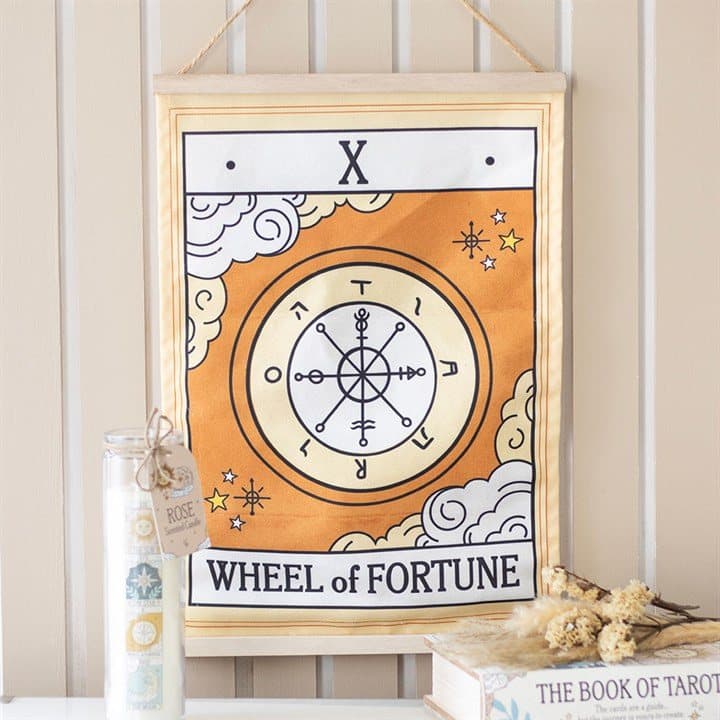
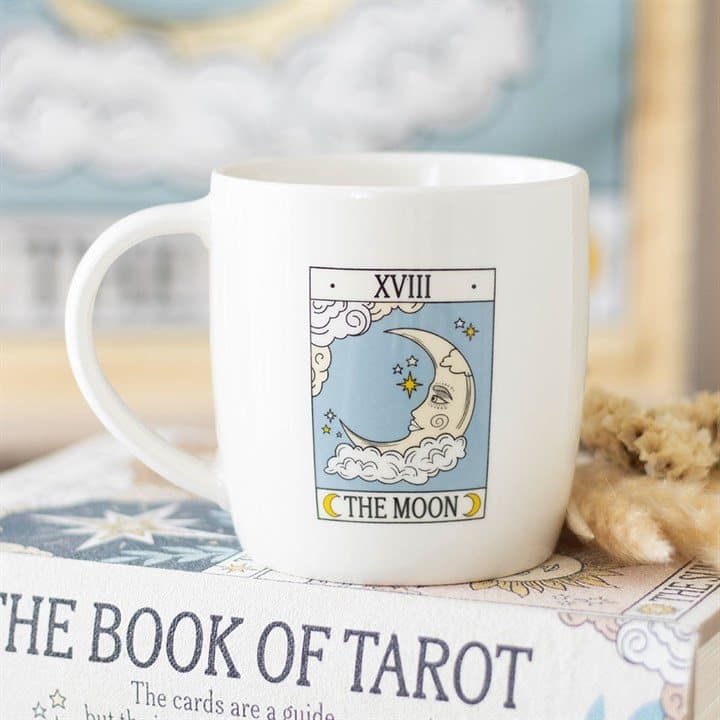
Love a single card? Our Vintage Tarot Wall Hanging Wheel of Fortune (£8.49) is made of cotton with a twine loop, ready to hang. The Moon Tarot Mug 350 ml (£5.49) is ceramic and safe in the microwave and dishwasher. To find a tarot deck to learn on, browse our tarot cards page.
 Same-day dispatch
 Same-day dispatch
What do the Cups tarot cards mean?
The Cups are one of the four suits of the Minor Arcana. In tarot tradition they belong to water and cover feelings, love, friendship and relationships. When Cups fill a reading, readers often see the question as one of the heart.
| Card | Upright meaning | Reversed meaning |
|---|---|---|
| Ace of Cups | New love, an emotional fresh start, compassion | Blocked feelings, emotional emptiness, holding back |
| Two of Cups | Partnership, mutual attraction, deep connection | Imbalance, a broken bond, miscommunication |
| Three of Cups | Friendship, celebration, community | Overindulgence, gossip, three's a crowd |
| Four of Cups | Apathy, contemplation, missed offers | New awareness, accepting offers, re-engaging |
| Five of Cups | Loss, regret, focusing on what is gone | Acceptance, moving on, forgiveness |
| Six of Cups | Nostalgia, childhood memories, innocence, kindness | Stuck in the past, moving forward |
| Seven of Cups | Many choices, daydreams, wishful thinking | Clarity, focus, making a firm decision |
| Eight of Cups | Walking away, seeking deeper meaning | Fear of leaving, aimless drifting, staying too long |
| Nine of Cups | Contentment, wishes fulfilled, satisfaction | Smugness, unmet wishes, inner dissatisfaction |
| Ten of Cups | Lasting happiness, family harmony, fulfilment | Family tension, unrealistic ideals, distance at home |
| Page of Cups | Creative ideas, curiosity, intuitive messages | Emotional immaturity, creative block, moodiness |
| Knight of Cups | Romance, charm, following your heart | Unrealistic plans, jealousy, mood swings |
| Queen of Cups | Compassion, calm, emotional care, intuition | Emotional overwhelm, codependence, neglecting your needs |
| King of Cups | Emotional balance, diplomacy, kind control | Coldness, volatility, emotional manipulation |
Beginners often read the Five of Cups as pure loss. Look closer: in the classic picture, two cups still stand behind the figure, so readers often see it as grief with something left to build on. The Four of Cups is not sadness but boredom, a person so inward they miss the cup being offered.
The Nine of Cups is traditionally called the wish card, a sign of contentment. The Ten of Cups takes that further, to family and home.
A tip for remembering the suit: think of each cup as a feeling. Ask what the cups are doing in the picture: full, spilled, offered or ignored. That one question unlocks most Cups meanings.
What do the Wands tarot cards mean?
The Wands suit belongs to fire in tarot tradition. It covers energy, ambition, creativity, passion and drive: the projects and plans that get you out of bed. When Wands show up, readers often see a question about action and motivation.
| Card | Upright meaning | Reversed meaning |
|---|---|---|
| Ace of Wands | Inspiration, new energy, a creative spark | Delays, low motivation, a false start |
| Two of Wands | Planning, future vision, big decisions | Fear of the unknown, playing it safe |
| Three of Wands | Expansion, foresight, progress, looking ahead | Obstacles, delays, frustration with progress |
| Four of Wands | Celebration, homecoming, harmony, milestones | Unsettled home, cancelled plans, transition |
| Five of Wands | Competition, rivalry, clashing ideas | Avoiding conflict, easing tension, inner conflict |
| Six of Wands | Victory, public recognition, success | Ego, fall from grace, lack of recognition |
| Seven of Wands | Standing your ground, defence, perseverance | Giving up, overwhelm, feeling under attack |
| Eight of Wands | Speed, swift action, movement, news | Delays, frustration, slowing down |
| Nine of Wands | Resilience, persistence, firm boundaries | Exhaustion, defensiveness, giving up too soon |
| Ten of Wands | Burden, heavy responsibility, hard work | Delegating, putting burdens down, collapse |
| Page of Wands | Enthusiasm, exploration, a free spirit | Procrastination, lack of direction, scattered ideas |
| Knight of Wands | Adventure, passion, bold action, impulsiveness | Haste, recklessness, scattered energy |
| Queen of Wands | Confidence, courage, warmth, determination | Self-doubt, jealousy, demanding behaviour |
| King of Wands | Leadership, vision, bold decisions | Impulsiveness, overbearing, impossible expectations |
The Five of Wands looks like a fight, but readers often see it as friendly competition or a lively clash of ideas, not a real fight. Beginners also misread the Ten of Wands as failure. It traditionally points to carrying too much: you are nearly there, but the load is heavy.
The Eight of Wands is traditionally the fastest card in the deck, all movement and news.
A tip for remembering the suit: picture a campfire. Small and new (Ace), spreading out (Three), roaring with rivals (Five), then too much to carry (Ten). Fire grows, spreads and burns out, and so do the Wands.
What do the Swords tarot cards mean?
The Swords suit belongs to air in tarot tradition. It covers thoughts, words, truth, decisions and conflict. When Swords fill a reading, readers often see the question as one of the mind.
| Card | Upright meaning | Reversed meaning |
|---|---|---|
| Ace of Swords | Clarity, breakthrough, truth, a sharp idea | Confusion, misinformation, clouded thinking |
| Two of Swords | Difficult choices, stalemate, avoidance | Indecision, information overload, confusion |
| Three of Swords | Heartbreak, sorrow, grief, hard truths | Releasing sorrow, forgiveness, moving on |
| Four of Swords | Rest, time out, quiet reflection | Restlessness, burnout, stirring back to life |
| Five of Swords | Conflict, winning at any cost, tension | Making amends, reconciliation, lingering resentment |
| Six of Swords | Transition, moving on, calmer waters | Resisting change, unfinished business, emotional baggage |
| Seven of Swords | Deception, strategy, getting away with something | Coming clean, confession, a guilty conscience |
| Eight of Swords | Feeling trapped, self-limiting beliefs, restriction | Release, a new perspective, freedom |
| Nine of Swords | Worry, sleepless nights, fear | Releasing worry, facing fears, hidden turmoil |
| Ten of Swords | A hard ending, rock bottom, a new start ahead | Slow renewal, surviving the worst, resisting an ending |
| Page of Swords | Curiosity, new ideas, a sharp mind | Gossip, hasty words, all talk |
| Knight of Swords | Ambition, fast action, direct speech | Rash words, impulsiveness, restlessness |
| Queen of Swords | Clear boundaries, honesty, independent thinking | Coldness, bitterness, harsh words |
| King of Swords | Clear thinking, authority, truth, fair judgement | Manipulation, misused power, cold logic |
The Swords have the hardest-looking pictures in the tarot deck, so beginners often panic. Read them calmly. The Three of Swords traditionally points to heartbreak and sorrow that can be named and felt. The Nine of Swords stands for worry and sleepless nights: readers often see the fear as bigger in the mind than in real life.
The Ten of Swords looks the worst of all, yet in tarot tradition it marks a hard ending, the lowest point, with a new start ahead. The dawn in the classic picture says it plainly.
A tip for remembering the suit: a sword cuts both ways. Each Swords card shows a thought that can wound or set you free.
What do the Pentacles tarot cards mean?
The Pentacles suit belongs to earth in tarot tradition. It covers work, money, home and everyday life: the solid things you can touch. When Pentacles show up, readers often see a practical, down-to-earth question.
| Card | Upright meaning | Reversed meaning |
|---|---|---|
| Ace of Pentacles | New opportunity, prosperity, a solid start | Lost opportunity, poor planning, shaky foundations |
| Two of Pentacles | Juggling priorities, balance, adaptability | Overcommitted, disorganised, money juggling |
| Three of Pentacles | Teamwork, skill, collaboration, learning | Poor teamwork, low effort, misalignment |
| Four of Pentacles | Saving, holding on, control, stability | Greed, overspending, learning to let go |
| Five of Pentacles | Hardship, money worries, feeling left out | Finding help, improvement, hard times ending |
| Six of Pentacles | Generosity, giving and receiving, sharing | Strings attached, debt, one-sided giving |
| Seven of Pentacles | Patience, long-term view, investment | Impatience, little reward, wasted effort |
| Eight of Pentacles | Hard work, skill, practice, dedication | Perfectionism, lack of focus, cutting corners |
| Nine of Pentacles | Independence, comfort, self-reliance, reward | Overworking, money setbacks, surface comfort |
| Ten of Pentacles | Wealth, family legacy, long-term stability | Family disputes, money troubles, fleeting success |
| Page of Pentacles | Study, a new skill, practical plans | Procrastination, slow progress, missed lessons |
| Knight of Pentacles | Routine, reliability, steady progress | Boredom, stagnation, laziness |
| Queen of Pentacles | Nurturing, practical care, a comfortable home | Work-home imbalance, self-neglect, smothering |
| King of Pentacles | Wealth, discipline, abundance, steady provider | Greed, stubbornness, materialism |
Beginners often read the Four of Pentacles as simply rich. Readers often see it as gripping too tightly: saving is good, but fear of losing can close you off. The Five of Pentacles is not only about money; it can also point to feeling left out in the cold, with help nearby if you look up.
The Seven of Pentacles asks for patience. The seeds are planted, the harvest takes time.
A tip for remembering the suit: think of a garden. You plant (Ace), tend (Seven), work hard (Eight) and enjoy the harvest (Nine and Ten). If you want a tarot deck with clear pictures for learning all four suits, our guide to tarot cards for beginners explains how to choose your first deck.
What do the numbers and court cards mean in tarot?
The numbers and court cards are the shortcut that unlocks all 56 Minor Arcana cards. Learn ten numbers and four court ranks, add the suit, and you can read most of the deck before you open the guidebook.
Each number carries the same traditional theme in every suit:
| Number | Traditional theme |
|---|---|
| Ace | A beginning, a seed, a fresh start |
| Two | A choice or a balance |
| Three | Growth and teamwork |
| Four | Stability, standing still |
| Five | Conflict or loss |
| Six | Harmony and moving on |
| Seven | Assessment and challenge |
| Eight | Movement and effort |
| Nine | Nearly there |
| Ten | Completion, the end of a cycle |
The court cards are the people cards. In tarot tradition they stand for a person, a role, or a side of you:
- Page: a learner, or a message.
- Knight: action and pursuit, chasing a goal.
- Queen: mastery turned inward: nurture, care and quiet strength.
- King: mastery turned outward: leadership and responsibility.
Now mix the number with the suit. The Five of Cups is loss (Five) in feelings (Cups), so readers often see it as sorrow over what went wrong. The Eight of Pentacles is effort (Eight) in work (Pentacles): steady practice at a craft. The Queen of Swords is mastery turned inward in the world of thoughts: clear, honest judgement.
Try it with any card, then check your guess against the tables above. You will be right more often than you expect, and each match makes the next card easier.
What do reversed tarot cards mean?
Reversed tarot cards are cards that land upside down when you turn them over. In tarot tradition, a reversed card keeps the theme of its upright meaning but shifts it. There is no single rule, so here are the three ways readers most often read a reversal:
- Blocked or delayed energy. The upright theme is there but stuck. A reversed Ace of Wands can read as an idea that is struggling to get off the ground.
- The energy turned inward. The theme plays out inside you, not in the world around you. A reversed Strength can point to self-doubt rather than outward courage.
- Too much or too little. The upright meaning is overdone or missing. A reversed Queen of Cups can read as caring so much for others that you forget yourself.
Do you have to read reversals? No. Many beginners read every card upright at first, so they learn 78 meanings, not 156. When the upright meanings feel easy, add the reversals. Both ways are proper tarot, and the choice is yours. Pick one approach before you shuffle and stay with it for the whole reading, so the cards all speak one language.
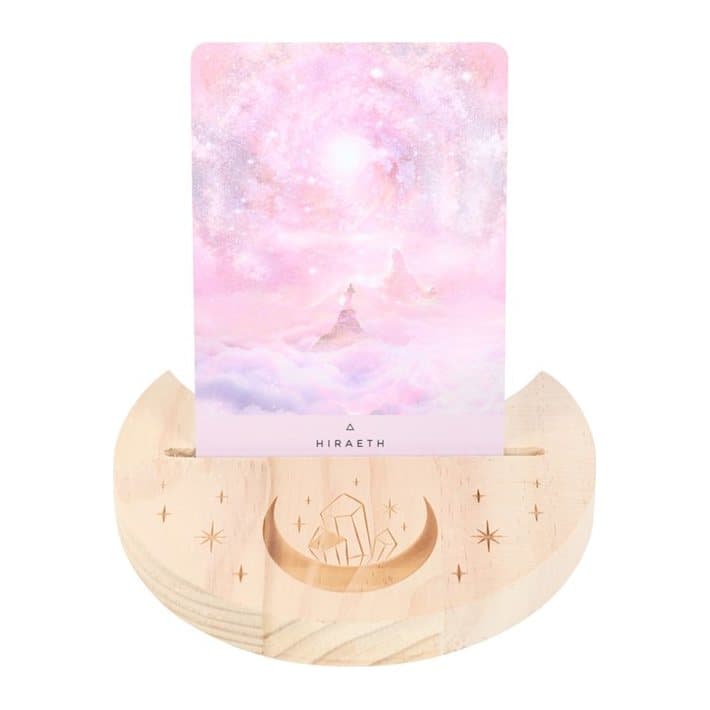
Here is a simple habit that helps. Stand your card of the day on a Crescent Moon Tarot Card Stand (£4.49) and glance at it through the day. The crescent moon stand is made to display a daily tarot card, and it weighs only 70 g, so it sits neatly on a desk or shelf. Turn it upside down now and then, and compare its upright and reversed meanings in the tables above.
 Same-day dispatch
How do people use tarot card meanings in a reading?
Tarot card meanings come alive when you put them to work. Here are four simple ways readers use them.
- A daily one-card draw. Shuffle, ask "What should I think about today?" and draw one card. Read its traditional meaning and ask how it fits your day. It is the quickest way to learn the deck.
- A three-card spread. A spread is a set layout where each place has a job. A classic three-card spread is past, present, and what to focus on next. Read each card, then read the three together.
- Picture first, then suit, then number. Look at the image and note what you notice. Then add the suit's area of life, then the number's theme. Only then check the tables. This builds your own reading, not a memory test.
- Journalling. Write down the card, your question and what it made you think. Over a few weeks you will see your own patterns.
For how to ask a good question, how to shuffle, and how to read several cards as one story, see our guide on how to read tarot cards.
Two simple tools make this easier. Lay your spread on a Tarot Reading Cloth 75 x 75 cm (£4.49): it is polyester, comes in Zodiac, Ancient Witch or Tree of Life designs, and gives your cards a clear space on any table. Then keep your notes in The Reader Tarot Notebook, A5 Lined (£7.49), with 100 lined sheets and a cover showing a moonlit reader and a dragon. One page per reading, and your notebook becomes your own book of tarot meanings.
 3 designs
 Same-day dispatch
Which tarot deck is best for learning the card meanings?
The best tarot deck for learning the card meanings is a 78-card deck with a guidebook whose pictures match the meanings you are studying. This guide uses the traditional Rider-Waite meanings, so a Rider-Waite style deck, with a full scene on every card, makes the link between picture and meaning easy to see.
Other systems work differently. Marseille decks often show simple patterns of cups, wands, swords or coins on the numbered cards, not scenes. Thoth decks rename some cards and use their own set of meanings. Both are rich, but both ask more of a beginner. Our guide to tarot cards for beginners compares the three styles and shows what to check on a product page.
Here are four decks from our tarot cards range, each with a guidebook or booklet:
- Foil Tarot Card Set with Guide (from £12.99): eight foil designs, each with a guidebook or booklet. The Gold Foil Book Gift Box, Moon Face, Kesulu Mythology, Witch Tarot and Mandala designs are full 78-card decks.
- The Light Seer's Tarot Cards (£26.49): a 78-card deck with a guidebook by Chris-Anne Donnelly, exploring light and darkness.
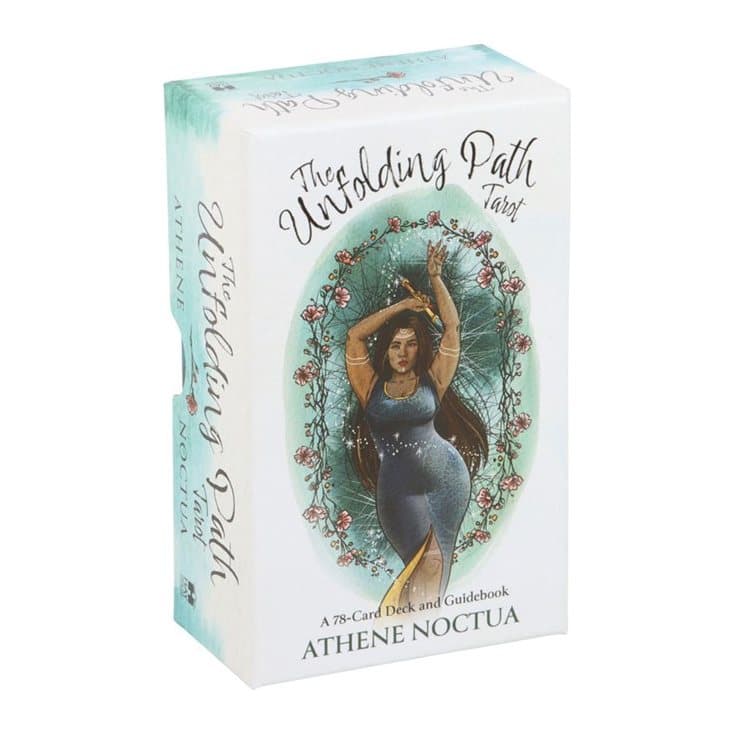
- The Unfolding Path Tarot Cards (£26.49): a 78-card deck with a guidebook, illustrated by Athene Noctua with diverse communities, including animals and plants.
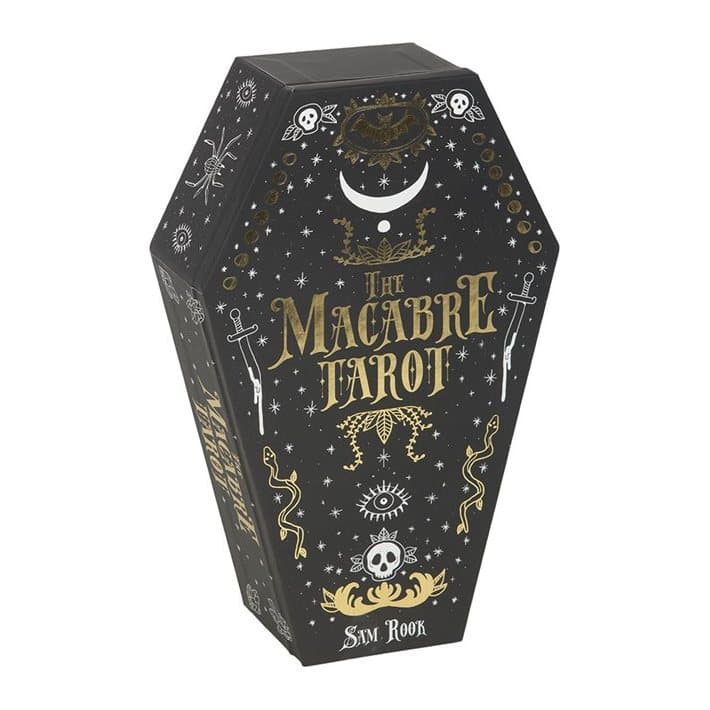
- The Macabre Tarot Deck (£25.49): a coffin-shaped 78-card deck with a detailed guidebook, reimagining the Major and Minor Arcana through macabre imagery.
Whichever deck you pick, lay a few cards next to the tables above and read the guidebook alongside them. When the pictures and the meanings click for you, you have found your deck.
 8 designs
 Same-day dispatch
 Same-day dispatch
 Same-day dispatch
How do you care for and cleanse a tarot deck?
Caring for a tarot deck is simple: keep it clean, dry and flat, and it stays crisp reading after reading.
- Wrap it. Keep your cards in their box, in a cloth, or in a tarot box between readings.
- Store it dry. Damp warps card. Keep the deck away from kitchens, bathrooms, windowsills and direct sun.
- Shuffle gently. Slide the cards together by hand, or mix them face down on a table. Bending them into a bridge can crease the edges over time.
- Clean hands. Lotion and crumbs mark the card faces.
Cleansing a deck is a reader tradition, not a rule. Many readers like to do it when a deck is new, after a heavy reading, or after someone else has handled it. Popular ways include:
- Knocking on the deck three times with your knuckles.
- Putting it back in order, starting with The Fool and ending with the King of Pentacles. This is also a great way to learn the cards.
- Moonlight: leaving the deck in its box near a window overnight, kept dry.
- A crystal on top of the deck while it rests.
- Incense smoke passed over the cards. Burn incense on a heatproof holder, in a ventilated room, and never leave it alone.
Pick the habit that feels right to you. What matters most is that the deck feels like yours.
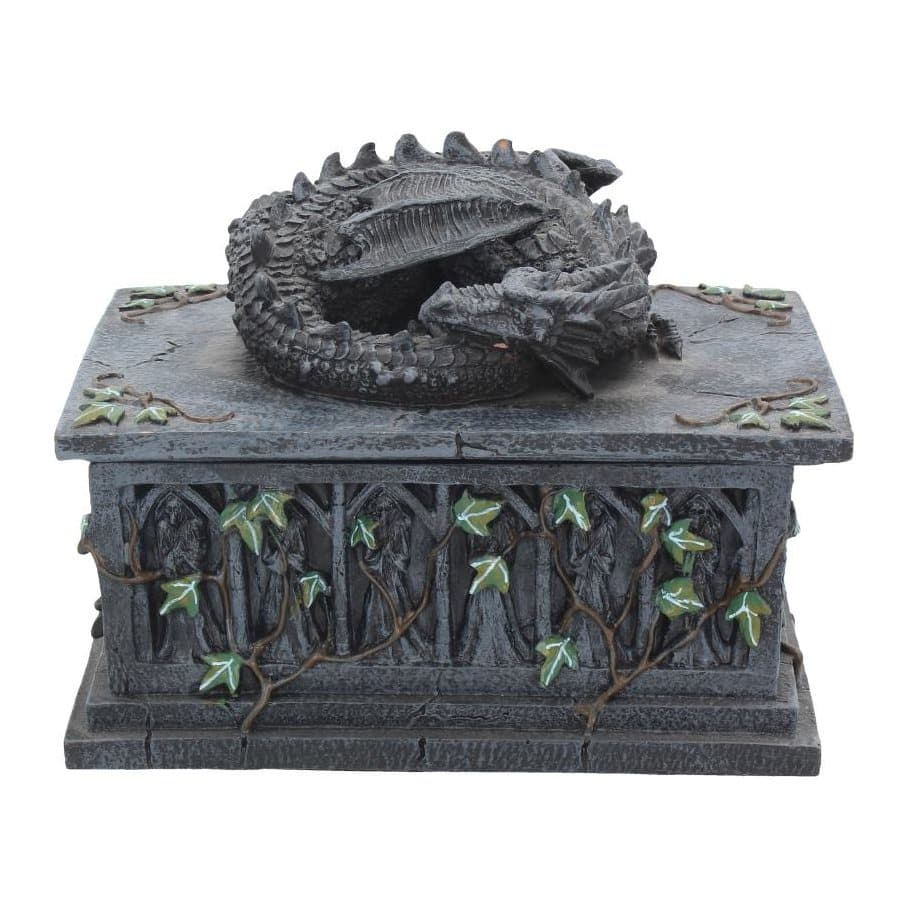
For storage with real character, the Dragon Ivy Tarot Card Holder Box (£23.49) is a resin box showing a young black dragon asleep on an obsidian altar carved with skeletons and climbing ivy. It holds the deck you already love: pick one from our tarot cards and give it a home worth opening.
What should you pair with your tarot cards?
Your tarot cards do the main work. A few extras help the habit stick and turn every reading into time set aside for you.
- A journal. Writing down your cards is how the meanings sink in. The Star Vintage Tarot A5 Notebook (£7.49) has 200 lined pages, gold edges and a vintage The Star card cover. In tarot tradition, The Star stands for hope and renewal, which suits a fresh notebook.
- A stand to show your card of the day where you will see it.
- A cloth to give your spreads a clear, tidy space.
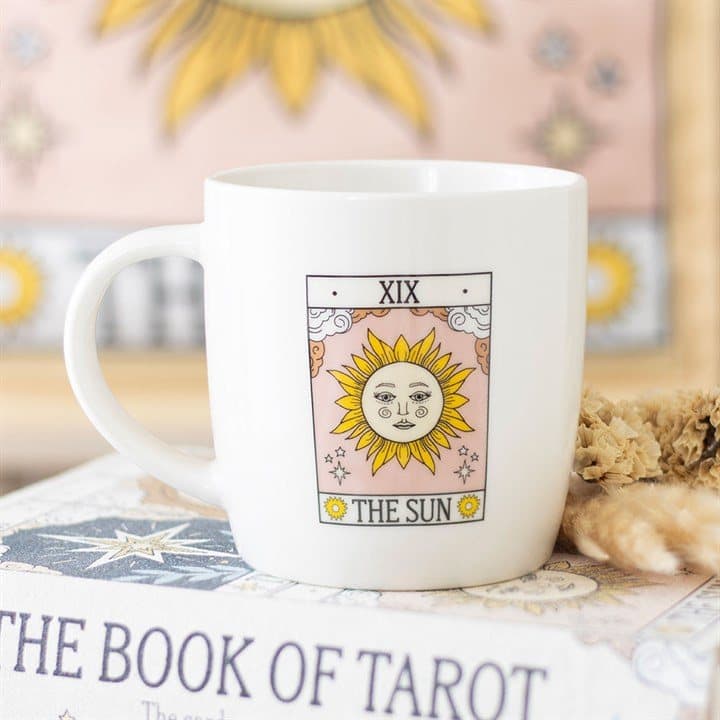
- Card-themed gifts. The Sun Tarot Mug Vintage Mystical 350 ml (£5.49) is a ceramic mug with a traditional Sun card design, and it is microwave and dishwasher safe. The Sun is traditionally the most positive card in the deck, so it is a cheerful one to start the morning with.
Buying for a tarot lover? Our gift sets bring decks and extras together, ready to give.
Ready to start? Choose your deck from our tarot cards range: full 78-card tarot decks with guidebooks, foil decks, gothic decks and artist decks, plus the stands, cloths and boxes to go with them. Every order travels by tracked UK delivery with Royal Mail or courier. On orders over £60, we pay the first £6 of delivery. If something is not right, you have 14 days to return it. Pick your deck, open this guide beside it, and draw your first card.
 Same-day dispatch
 Same-day dispatch