
Key points
- The evil eye is the old belief that an envious or admiring look can bring bad luck.
- The blue eye charm is called nazar in Turkish and mati in Greek.
- The hamsa is an open-hand charm from the Middle East and North Africa, often with an eye in the palm.
- Dark blue is the most traditional evil eye colour.
- In folk tradition, a cracked charm has done its job and is replaced.
What does the evil eye mean?
The evil eye means two things. First, it is the old belief that an envious or admiring look can bring bad luck. Second, it is the blue eye charm traditionally worn or hung to turn that look away.
Browse our spiritual jewellery for evil eye earrings and hamsa bracelets you can wear every day, and our hanging charms for the home.
The belief is very old. It turns up in ancient Greece and Rome, across the Middle East, the Mediterranean and South Asia. The Greek writer Plutarch discussed it nearly two thousand years ago, which shows how long the idea has been around.
The charm has its own names:
- Nazar is the Turkish word, and the classic bead is a nazar boncugu, a blue glass bead traditionally made in Turkey.
- Mati is the Greek name for the same eye.
- Hamsa is a different charm: an open hand from the Middle East and North Africa, also called the Hand of Fatima or Hand of Miriam. It often has an eye in the palm.
What do the colours mean? Dark blue is the most traditional colour, and it is the one you see on the classic glass beads. Other colours appear in modern designs, but if you want the look people recognise straight away, go for deep blue.
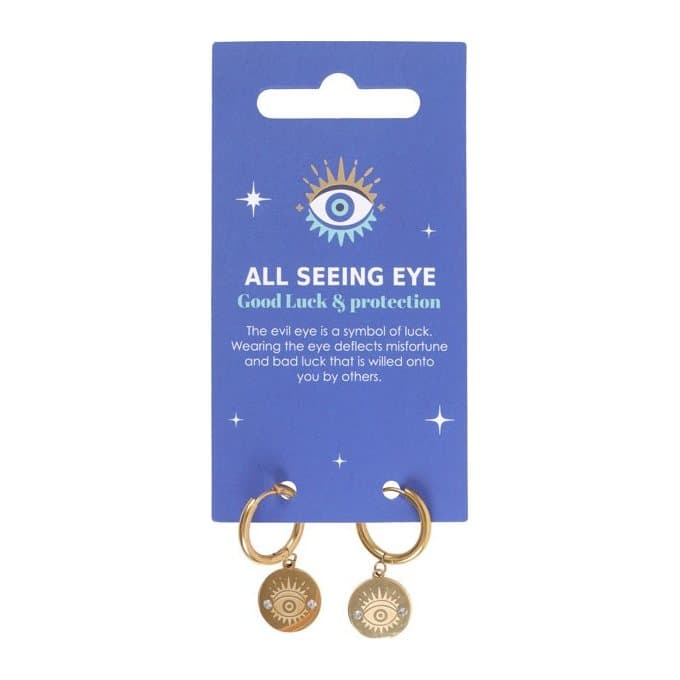
For a wearable take on the classic, our Gold Toned All Seeing Eye Evil Eye Earrings (£5.49) are gold-toned stainless steel and come on a blue card printed with the meaning of the charm. They make the history easy to pass on when you give them as a gift.
 Same-day dispatch

How do people use an evil eye charm?
People use an evil eye charm in two main ways: they wear it or they hang it. Both follow the same folk tradition of keeping the eye on show, so it is the first thing a passing look lands on.
Worn charms. Bracelets, necklaces and earrings are the everyday choice. In many families a small blue bead is pinned to a baby's clothes or tucked into a pram, and many people keep one on a wrist for years.
Hung charms. In Turkey and Greece you will see blue eyes by front doors, over shop counters, on key rings and dangling from car mirrors. The idea in folk belief is simple: the eye sits where people come and go.
Popular spots at home:
- By the front door, facing the way visitors arrive.
- In the car, hung from the mirror where it will not block your view of the road.
- At a desk or shop counter, where people stop and look.
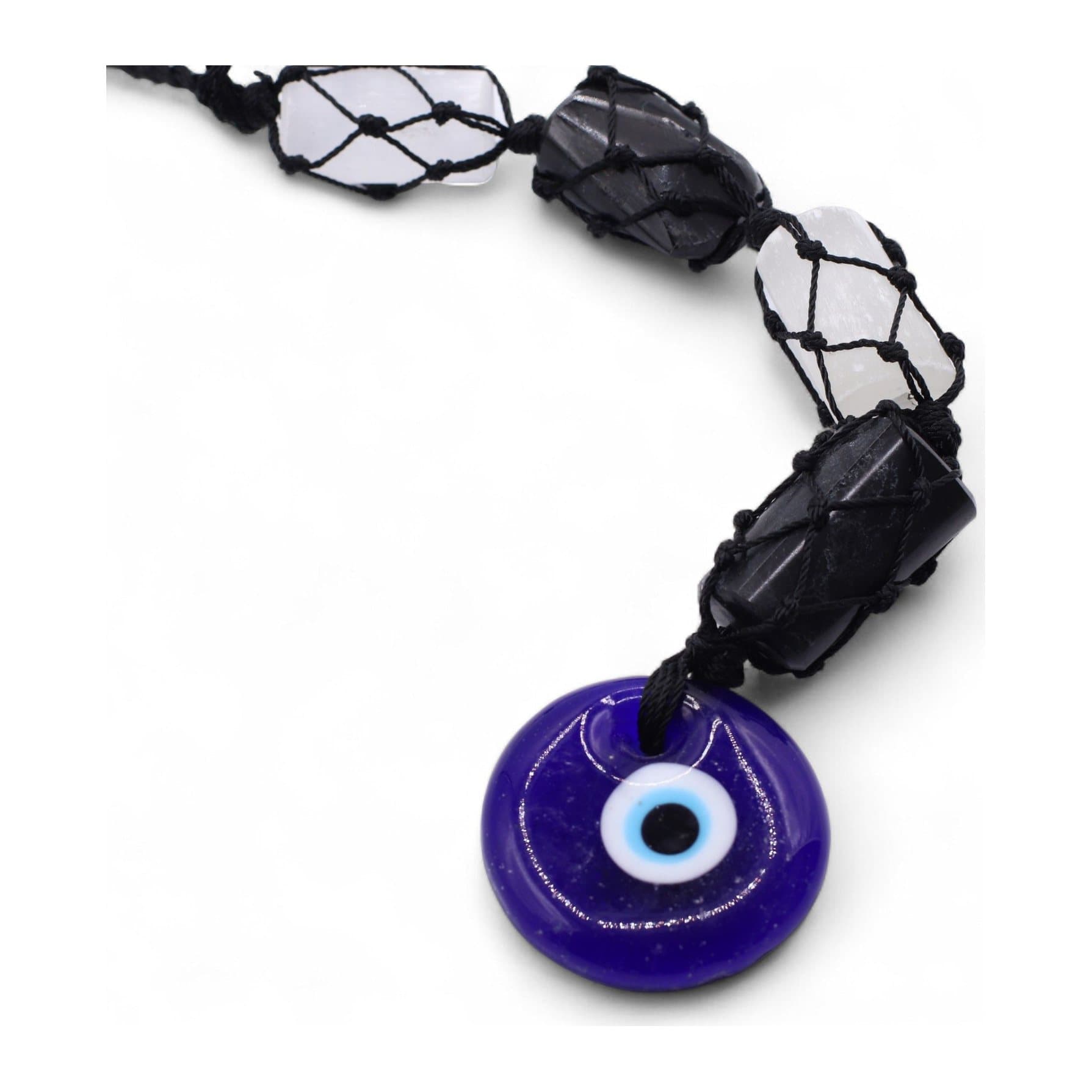
Our Black Tourmaline Selenite Evil Eye Hanging Stone (£10.99) is made for exactly this. It is a handmade pendant of black tourmaline and selenite with a blue evil eye charm, 35 x 4 cm, to hang by a door or in a car.
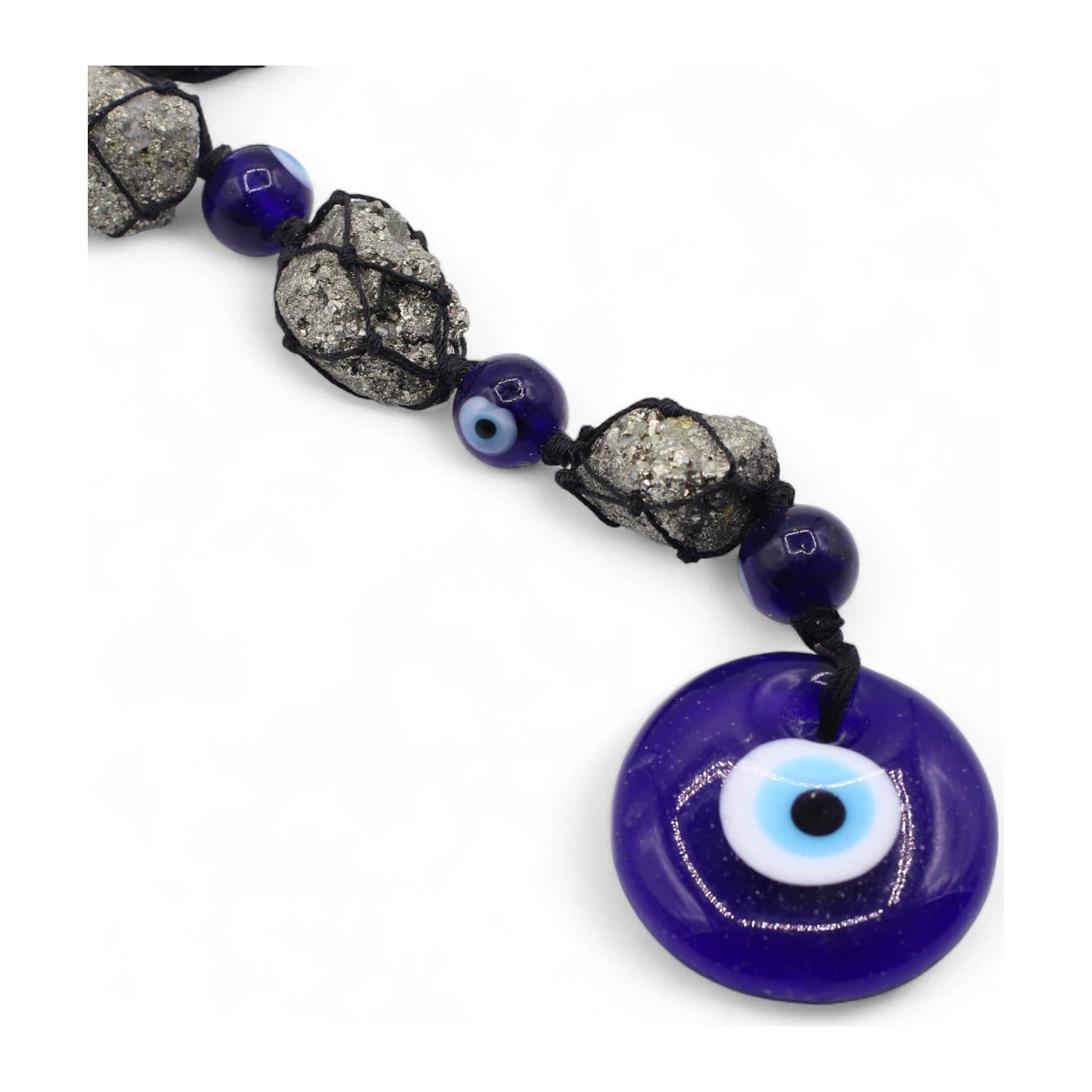
Prefer warmer tones? The Hanging Stone Pendant with Pyrite and Evil Eye (£10.99) pairs natural pyrite with deep-blue glass beads, 34 x 4 cm, for home, office or car. Pyrite is a brassy gold mineral, sometimes called fool's gold.
Gifting is part of the custom too. In many places an evil eye is a common gift for a new baby, a new home or a new business.
How do you choose an evil eye: bracelet, necklace or home charm?
Choose by where you want the eye to be: on your wrist every day, close to your face, or in your home. A bracelet is the easiest start, earrings are the neatest, and home charms suit anyone who does not wear jewellery.
Bracelets are simple to wear and simple to gift. Stretchy styles need no clasp and no sizing.
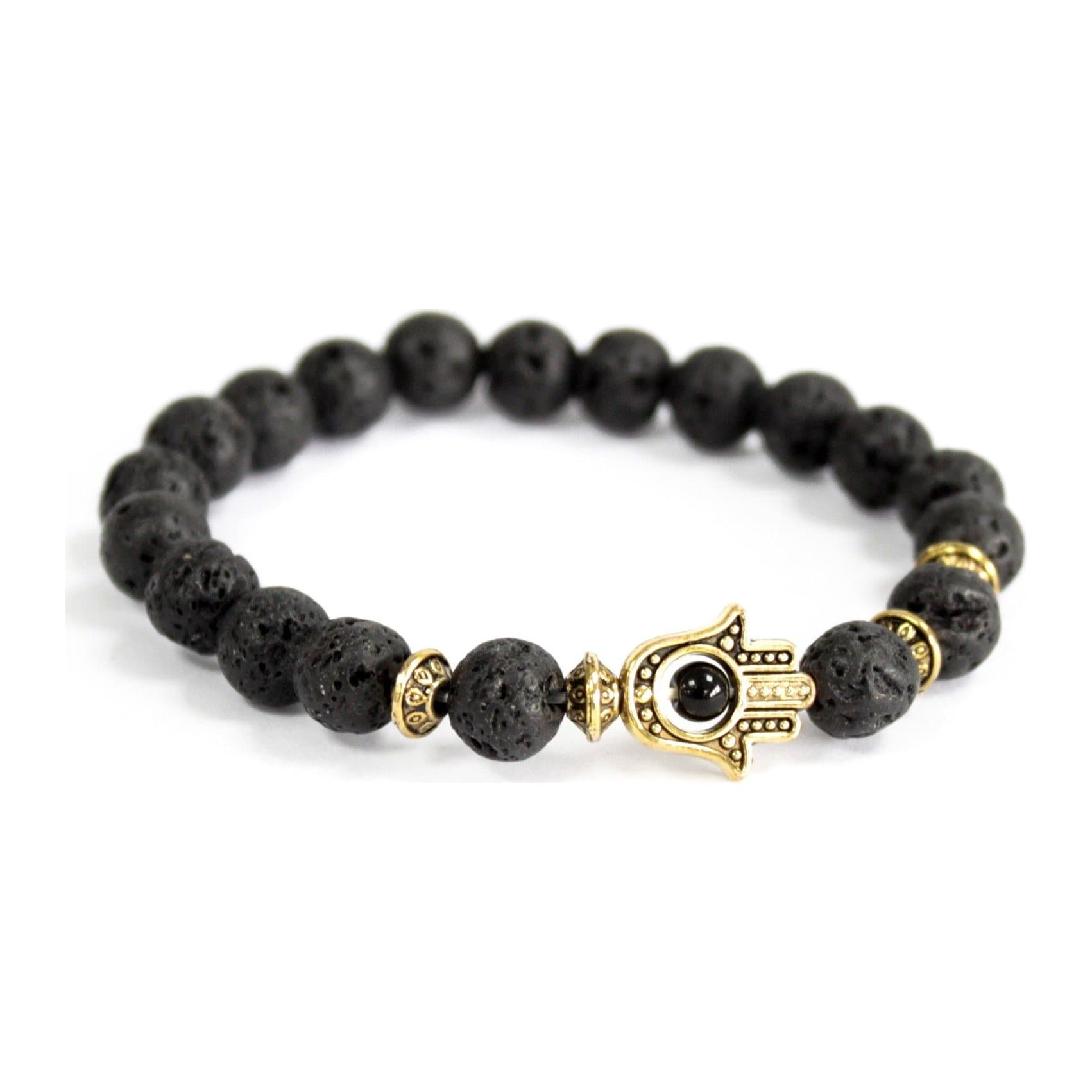
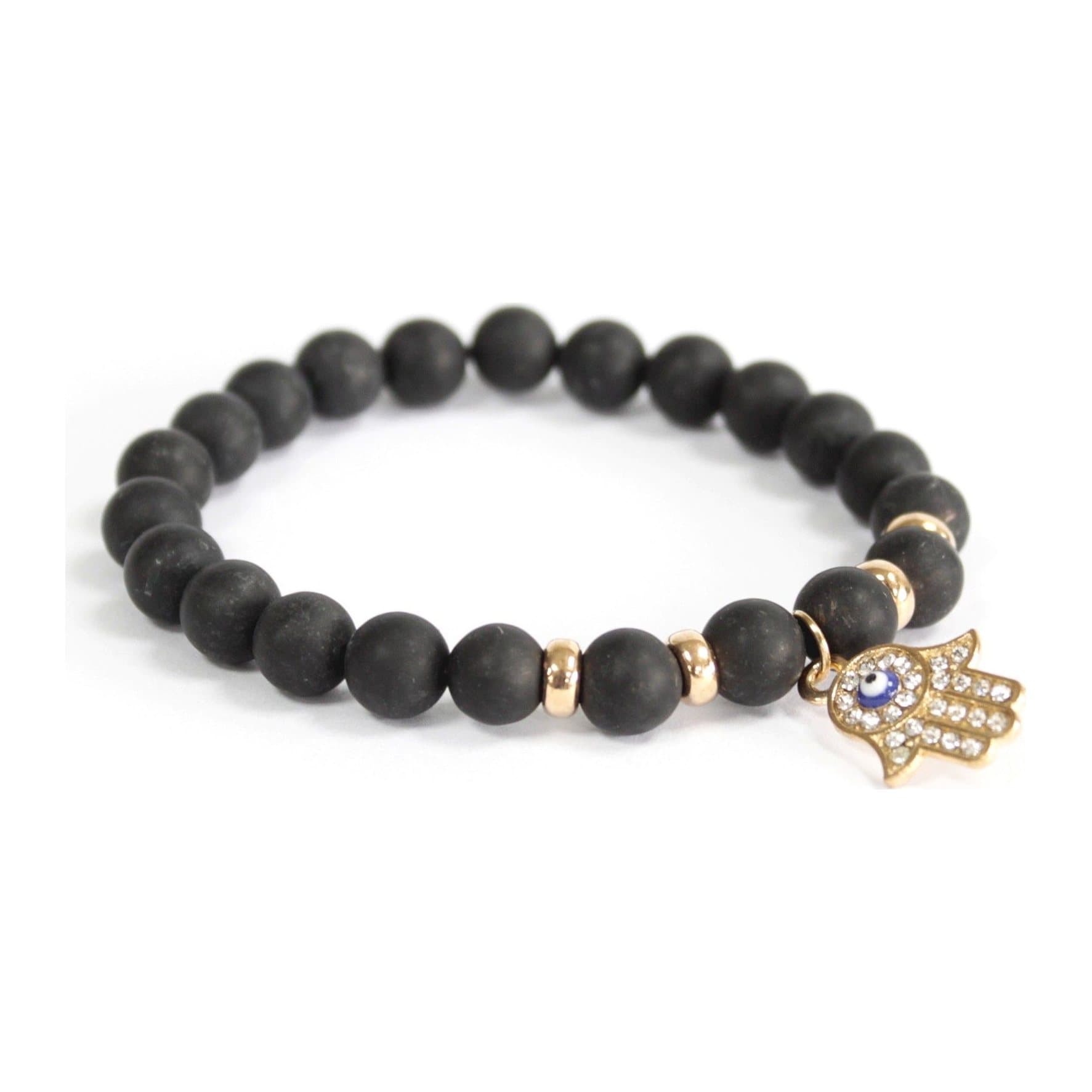
- The Lava Stone Gold Hamsa Bracelet (£3.99) is a unisex boho piece with a gold hamsa. Lava stone is a light, porous rock formed from cooled volcanic lava, and it is traditionally linked to rebirth.
- The Hamsa Black Agate Gemstone Bracelet (£3.99) strings black agate beads on a stretch cord with a single charm, one size fits all.
Earrings keep the charm small and smart. For a special gift, the Silver & Gold Hamsa Earring (£37.49) is made in 18k gold and 925 silver, 2.5 cm high with the drop, on a hook fitting.
Necklaces hang the eye where people can see it straight away. Look for a pendant in deep blue if you want the traditional look.
Home charms suit people who would rather not wear jewellery, or who want the eye by the door. Hanging stones, wall pieces and decor all follow the same idea as the hung nazar.
Which colour? Dark blue is the traditional choice. Gold and silver settings are modern finishes rather than old rules, so pick the metal you already wear.
Natural stones like agate and lava vary in colour and pattern from the photo, so yours will be one of a kind.

How do you look after an evil eye, and what if it breaks?
Look after an evil eye like any small piece of glass or jewellery: keep it dry, store it apart, and handle it gently. If it cracks, folk tradition says it has done its job and should be replaced.
Everyday care.
- Glass beads can chip if they knock against hard surfaces, so take bracelets off for the gym, gardening or washing up.
- Stretch bracelets last longer if you roll them on and off rather than pulling them wide.
- Metal pieces such as gold-toned or silver earrings stay brighter if you keep them away from perfume, lotion and water, and wipe them with a soft dry cloth.
- Natural stones like agate and pyrite prefer a dry cloth. Selenite is a soft mineral that marks easily and does not like water, so never soak a hanging stone that contains it.
- Wood and enamel pieces only need a dust with a dry cloth.
Storage. Keep each piece in its own pouch or box so beads and metal do not scratch each other. Hanging pieces can stay where they are, out of direct rain and steam.
What if it breaks? In the old belief, a cracked or broken nazar has taken the look meant for its owner. Some people thank it, put it away and hang or wear a new one. Others simply keep it. It is a folk custom, not a rule, so there is no wrong answer.
Hanging charms in the car should sit where they do not block your view of the road, and should be tied firmly so they do not swing about while you drive.
What do people pair with an evil eye?
People most often pair an evil eye with a hamsa, with blue stones and with home decor that carries the same motif. The two charms come from neighbouring traditions, so they sit well together.
Hamsa and evil eye together. Many hamsa designs already include an eye in the palm. Wearing a hamsa bracelet beside a blue eye bead is a common combination.
Blue stones. Lapis lazuli is a deep blue rock that people have prized for thousands of years. Our Evil Eye Lapis Lazuli Gemstone Tree Dome (£17.99) has 20 handcrafted evil eye beads rooted in lapis lazuli chips on a wooden base, under a glass dome, 8 x 12 cm.
Home pieces.
- The Evil Eye Incense Holder, Enamel and Mango Wood (£7.49) holds incense sticks or trinkets, 29.5 x 7.5 x 2.5 cm. Always burn incense on a heat-proof surface, open a window, never leave it burning alone, and keep it away from children and pets.
- The Evil Eye Macrame Dream Catcher (from £7.99) is hand made with a natural rattan frame and feathers, in small, medium or large.
Want a bigger statement? Our feng shui and home range includes carved mango wood hamsa wall pieces and evil eye rope rugs and baskets.
Keep it simple. One worn charm and one hung charm is a classic pairing: an eye on you and an eye by the door.
Ready to choose yours? Shop our spiritual jewellery for evil eye earrings and hamsa bracelets, with tracked UK delivery and 14-day returns.


 8 designs