Key points
- Amethyst is purple quartz, coloured by traces of iron and natural irradiation.
- Its name comes from the Greek amethystos, meaning 'not drunk', and ancient Greeks carved drinking cups from it.
- Amethyst is the birthstone for February and scores 7 on the Mohs hardness scale.
- In crystal lore it is associated with calm, intuition and spiritual awareness, and linked with the crown and third eye chakras.
- Amethyst fades in long direct sunlight, so keep it out of sunny windows.
What does amethyst mean?
Amethyst is purple quartz, and in crystal lore it is traditionally associated with calm, intuition, clear thinking and spiritual awareness. Geology explains the colour. Tradition gives the meaning.
Browse our crystals for amethyst tumble stones, points, spheres, clusters and geodes, each one a natural stone with its size on the page.
The purple comes from traces of iron in the quartz plus natural irradiation, which means low-level radiation from the surrounding rock over a very long time. That is why shades run from pale lilac to rich violet.
The name is ancient. It comes from the Greek amethystos, meaning "not drunk", and ancient Greeks carved drinking cups from the stone.
Quick facts worth knowing:
- Birthstone: amethyst is the birthstone for February.
- Hardness: it scores 7 on the Mohs scale, a 1 to 10 scale of scratch resistance, so it stands up well to everyday handling.
- Origin: the big geodes come mainly from Brazil and Uruguay.
In yoga tradition, chakras are described as seven centres arranged in a line, from root to crown. Amethyst is linked with the crown chakra (Sahasrara) and the third eye chakra (Ajna).
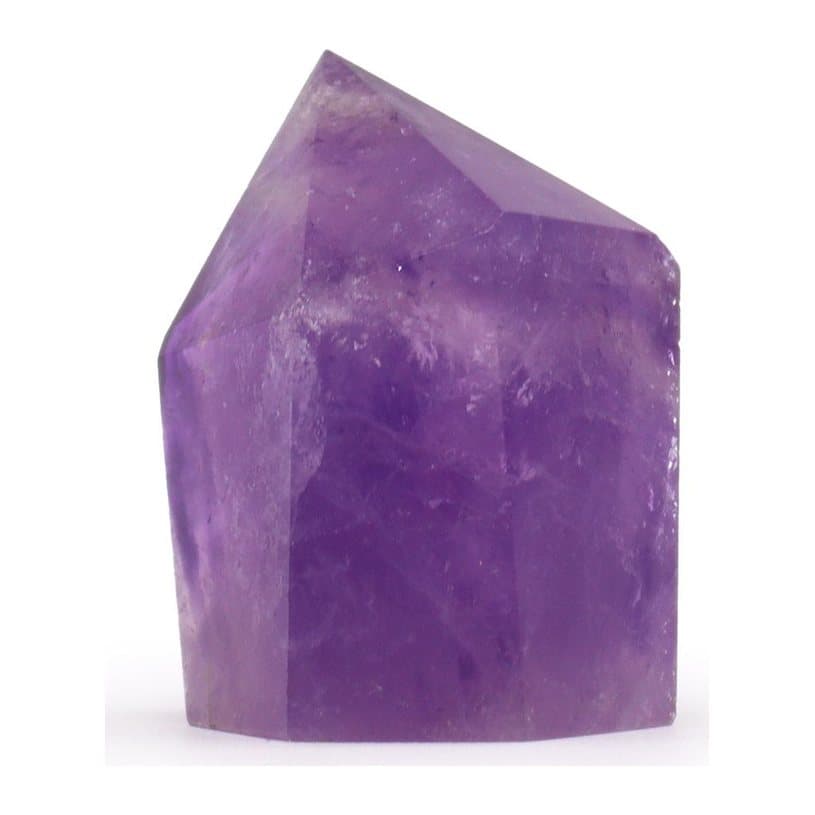
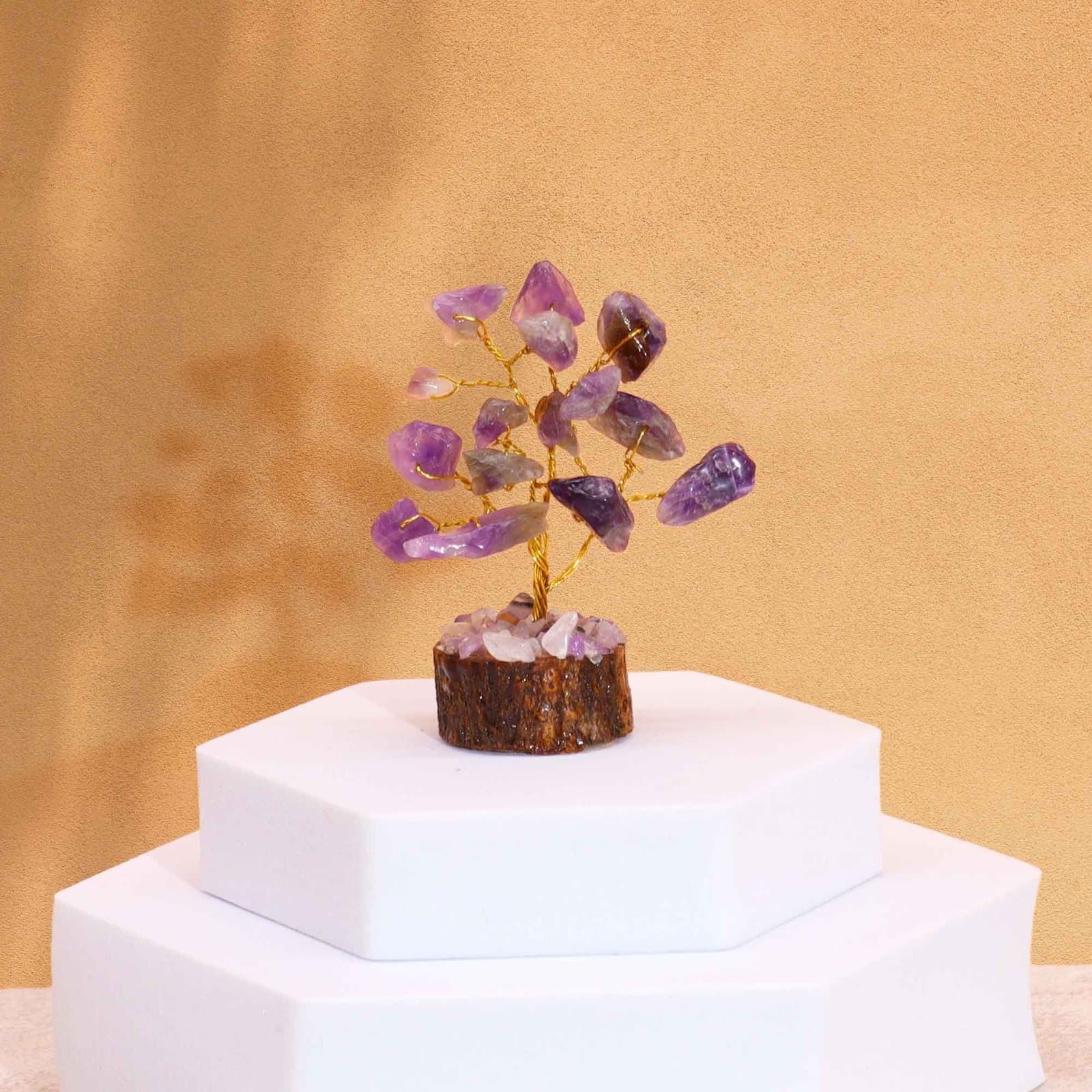
Want one piece that shows off that purple? Our Small Amethyst Crystal Point 4–5.5 cm (£8.99) is polished to a deep colour and sits neatly on a desk. For a bold centrepiece, the African Amethyst Crystal Sphere with Stand (from £13.99) comes in 40mm or 50mm with its own stand.
 2 designs
How do people use amethyst?
People use amethyst in three main ways: on display, in ritual and as jewellery. You need no special kit, and one stone is enough to start.
On display. Many people keep a point, cluster or sphere on a desk, shelf or altar. An altar is simply a small table or shelf set aside for candles, cards and stones. Keep it out of direct sun, as the colour fades in strong light.
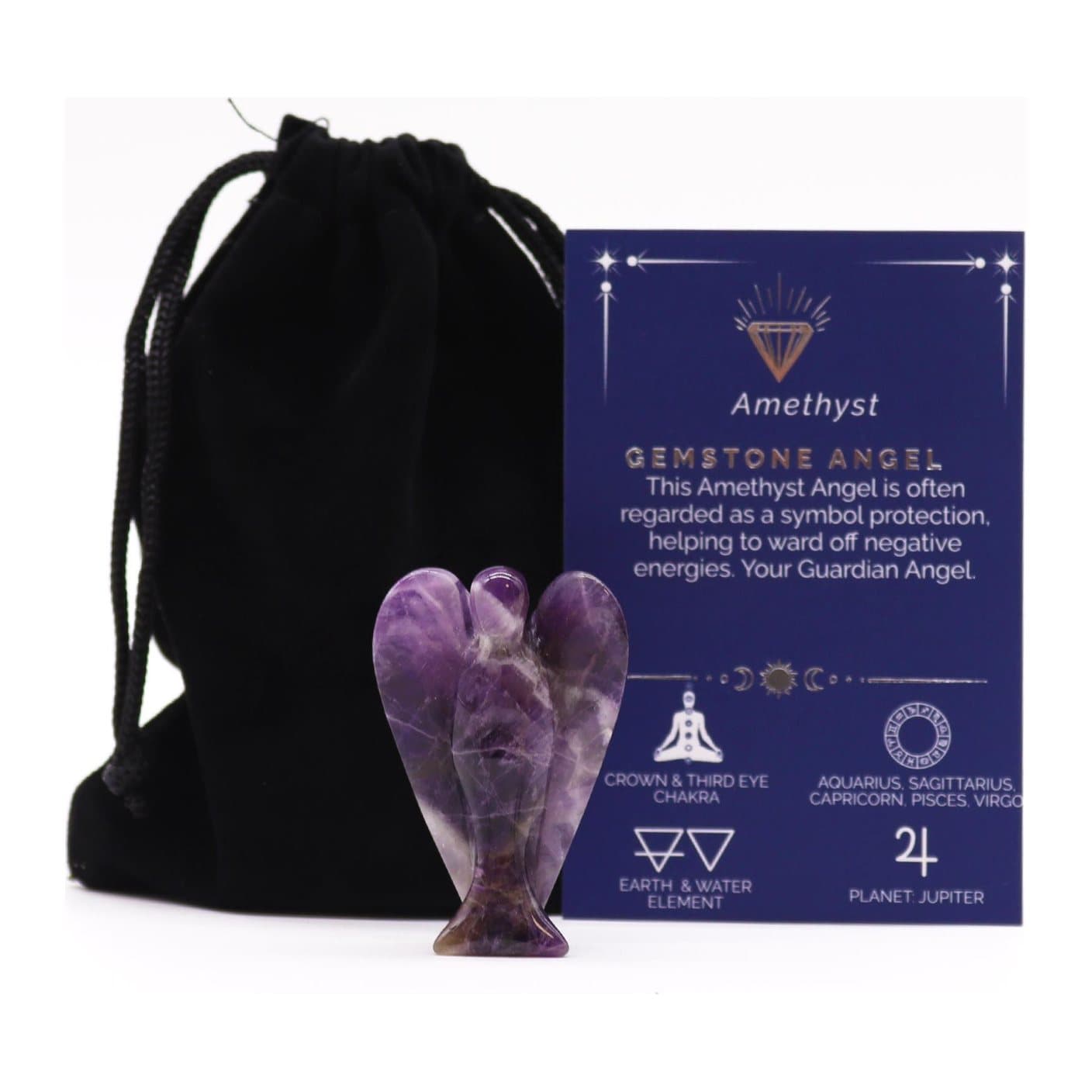
In meditation. Many people hold a stone or set one nearby while they meditate, because crystal lore ties amethyst to intuition and spiritual awareness. Our Hand Carved Amethyst Gemstone Angel (£10.99) is just 5 x 1 cm, so it fits on the smallest altar or in a pocket.
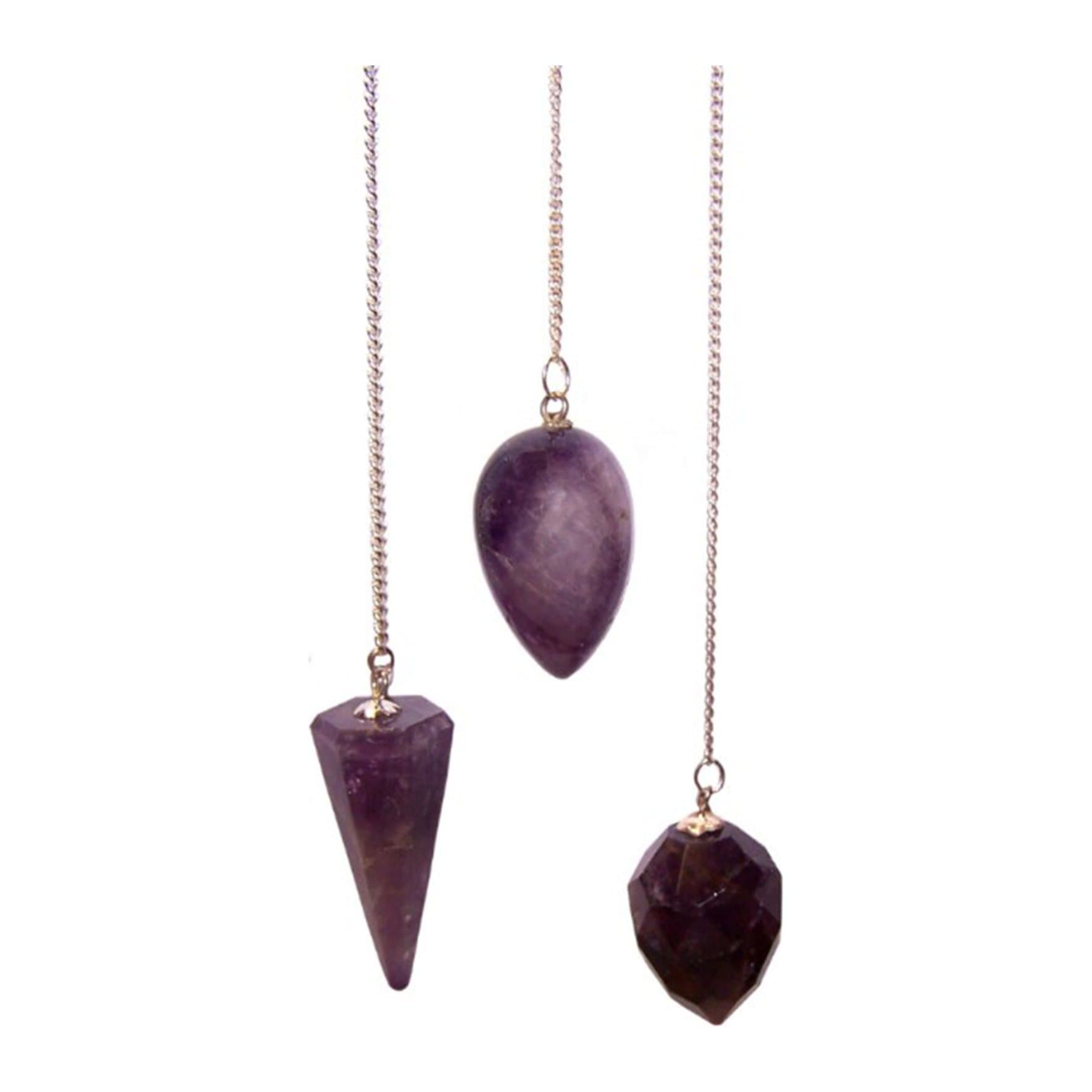
In divination. A pendulum is a small weight on a chain. In dowsing, people hold it still, ask a question and read the swing as yes or no. Our Amethyst Crystal Pendulum for Dowsing (£4.49) is handmade, 4 x 2 x 2 cm, on a silver-plated chain about 170 mm long.
In crystal grids. A crystal grid is a pattern of stones laid out around a centre piece for a ritual or intention. Tumble stones and small points suit grids well.
As a gift. Because amethyst is February's birthstone, it is a classic birthday pick for anyone born that month. A mini gemstone tree or a carved angel makes an easy, affordable present.
Whatever you choose, the stone is the same purple quartz. How you use it is up to you.
How do you choose amethyst: tumble stone, cluster, geode, tower or jewellery?
Choose by where the stone will live: tumble stones for pockets and grids, clusters and geodes for display, points and towers for altars, and jewellery to wear every day.
- Tumble stones are rough pieces rolled in a barrel with grit until smooth. Our African Chevron Amethyst Tumble Stones (from £3.99) come as a bag of medium (12) or small (24), with purple amethyst and white quartz in V-shaped stripes.
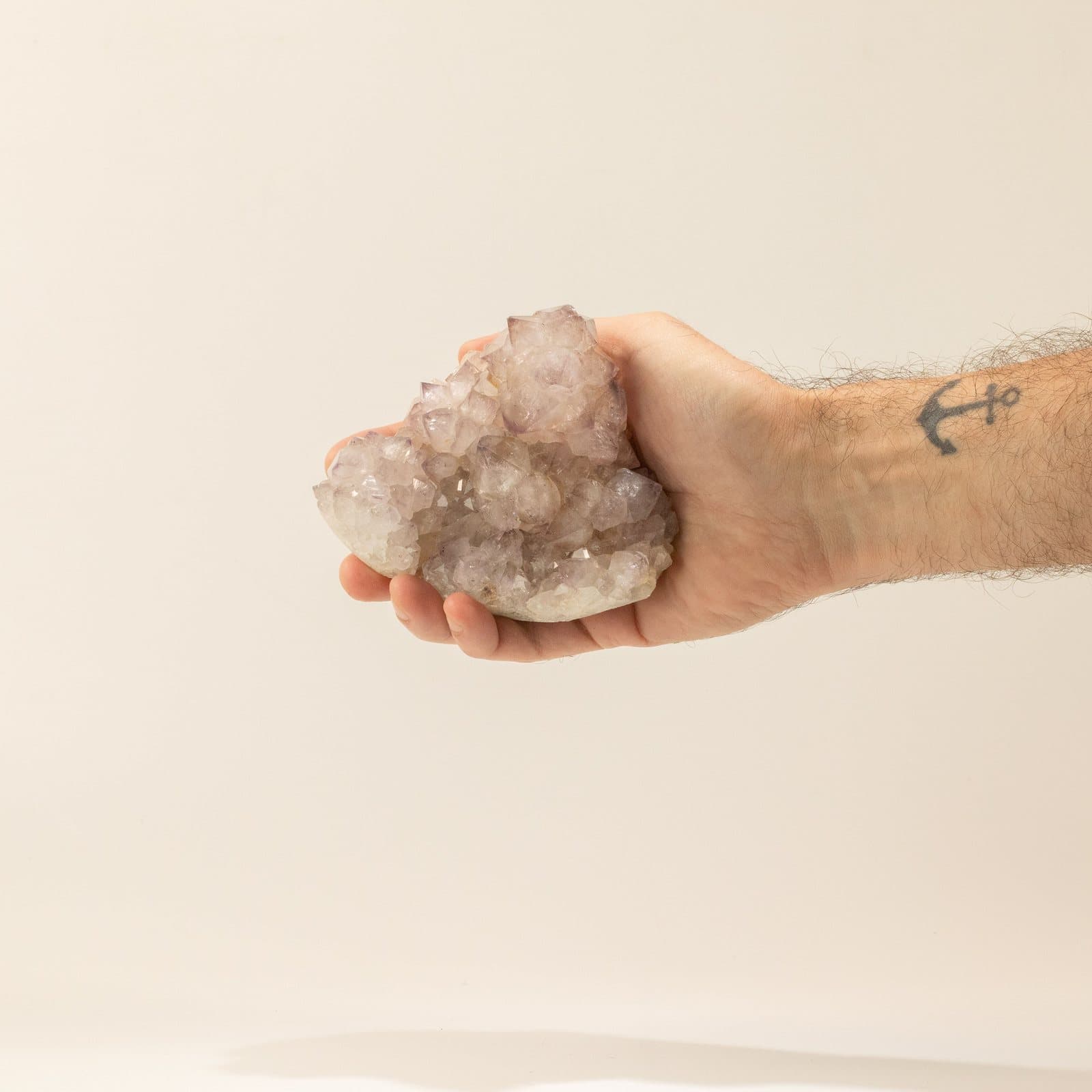
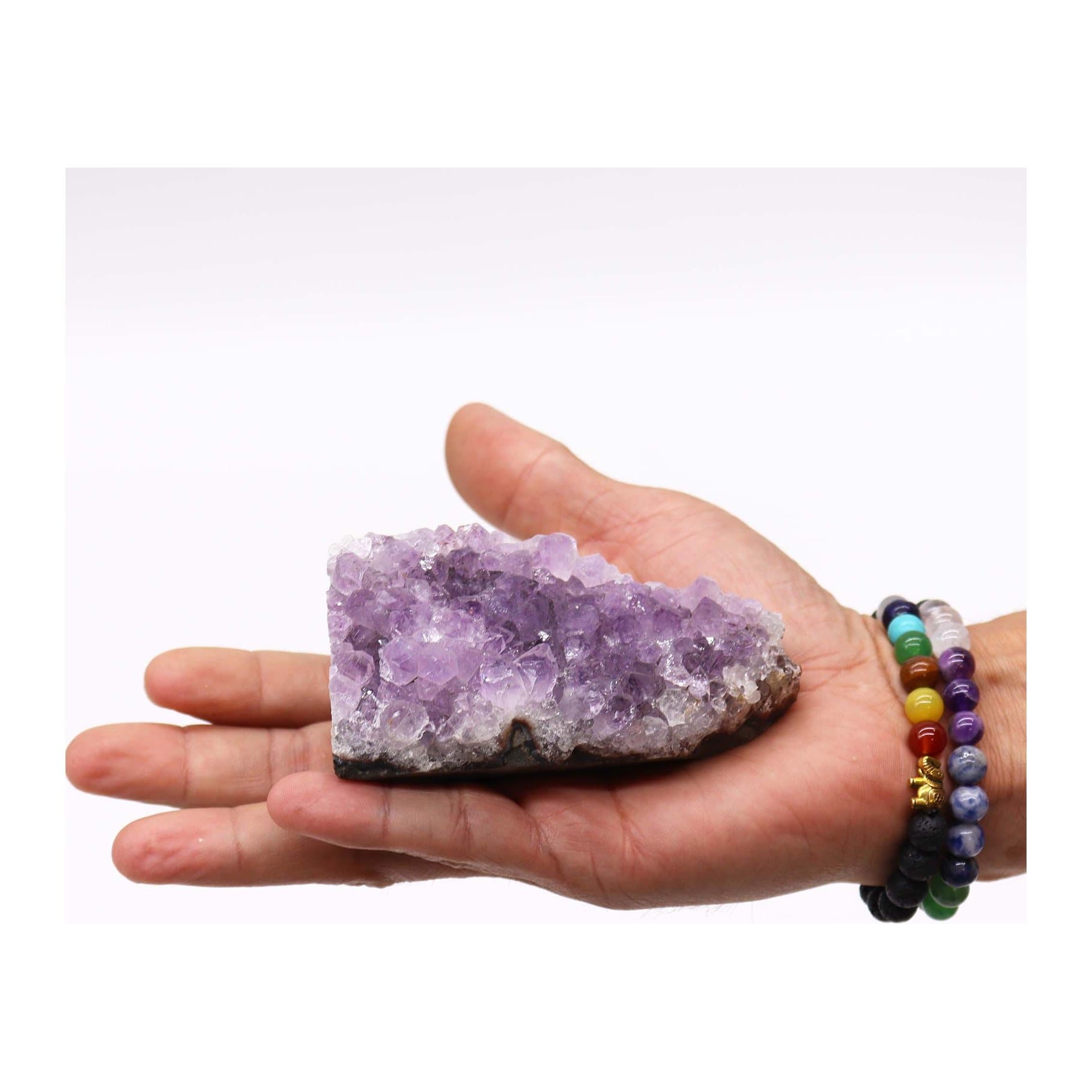
- Clusters are groups of crystals growing from one shared rock base, called the matrix. The Amethyst Standing Cluster, Medium 7.5–10 cm (£39.49) weighs 350 to 450 g, stands on its own and is covered in sparkling points.
- Geodes are hollow rocks lined inside with crystals. Our Assorted Amethyst Geodes 6–9 cm, About 1 kg (£19.99) gives you two to three opened geodes in one bag, ideal for spreading round a room.
- Points and towers are single crystals with a natural or polished tip. They stand upright and suit altars and desks.
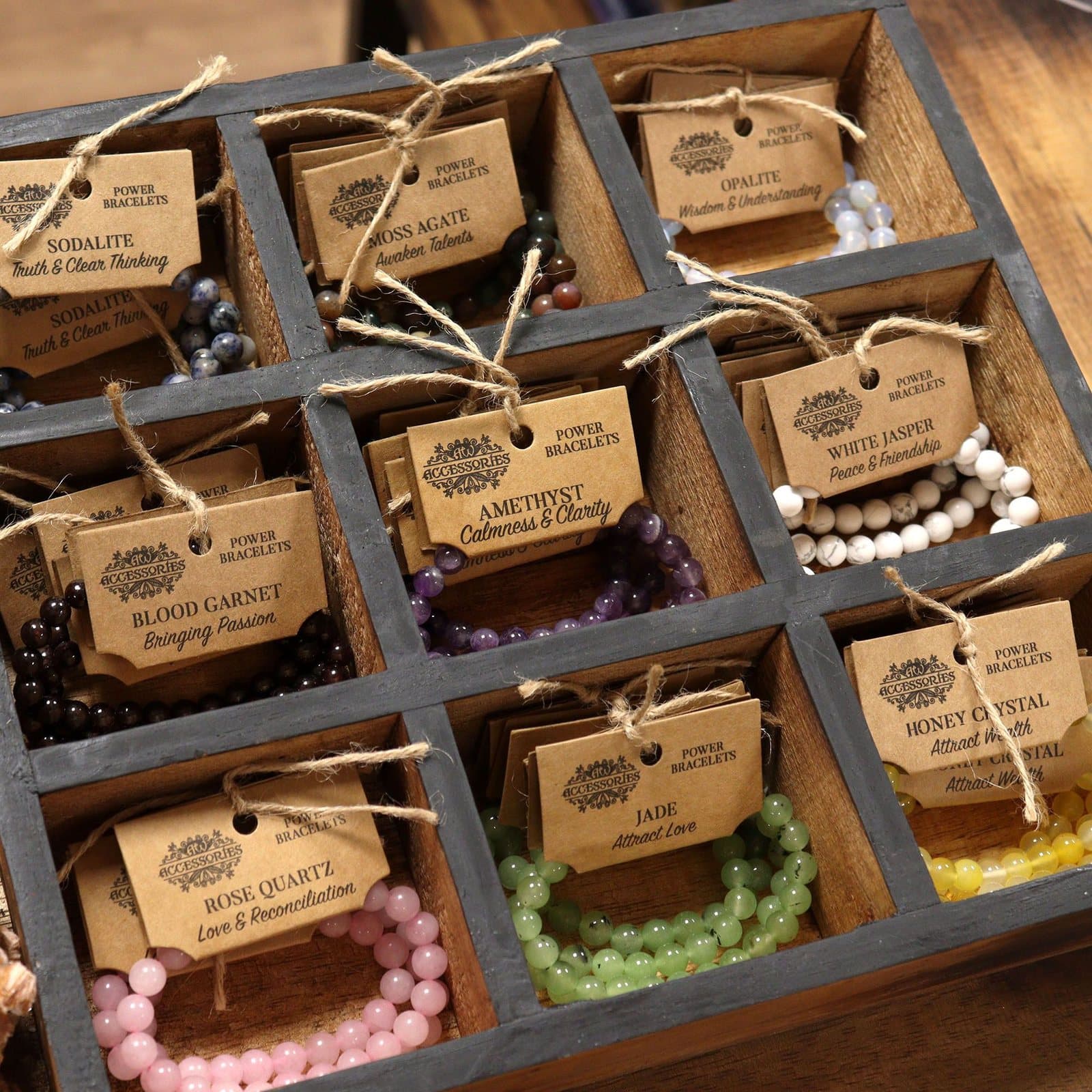
- Jewellery keeps amethyst with you all day, and its hardness of 7 makes it a sturdy choice. The Amethyst Power Bracelet, 8 mm Beads (£7.49) sits on a stretch band, and the Amethyst Cross Cord Necklace (£5.49) is polished smooth on an adjustable cord. See more in our spiritual jewellery.
One honest note: every natural stone varies in colour and pattern from the photo. That is part of the fun, because no two pieces match.
How do you cleanse and care for amethyst?
Cleanse amethyst with smoke, moonlight, sound or a quick rinse in plain water, then keep it out of long, direct sunlight. In crystal practice, cleansing is a simple ritual many people do when a stone first arrives and again from time to time.
- Smoke: pass the stone through the smoke of incense or a white sage bundle for a few seconds. Burn it over a heat-proof dish, open a window, never leave burning material alone, and keep it away from children and pets.
- Moonlight: set the stone outside or on a sill overnight, often at full moon. Bring it in before the morning sun reaches it.
- Sound: ring a bell or singing bowl close to the stone for a minute.
- Water: give tumbled stones only a quick rinse, then dry them with a soft cloth.
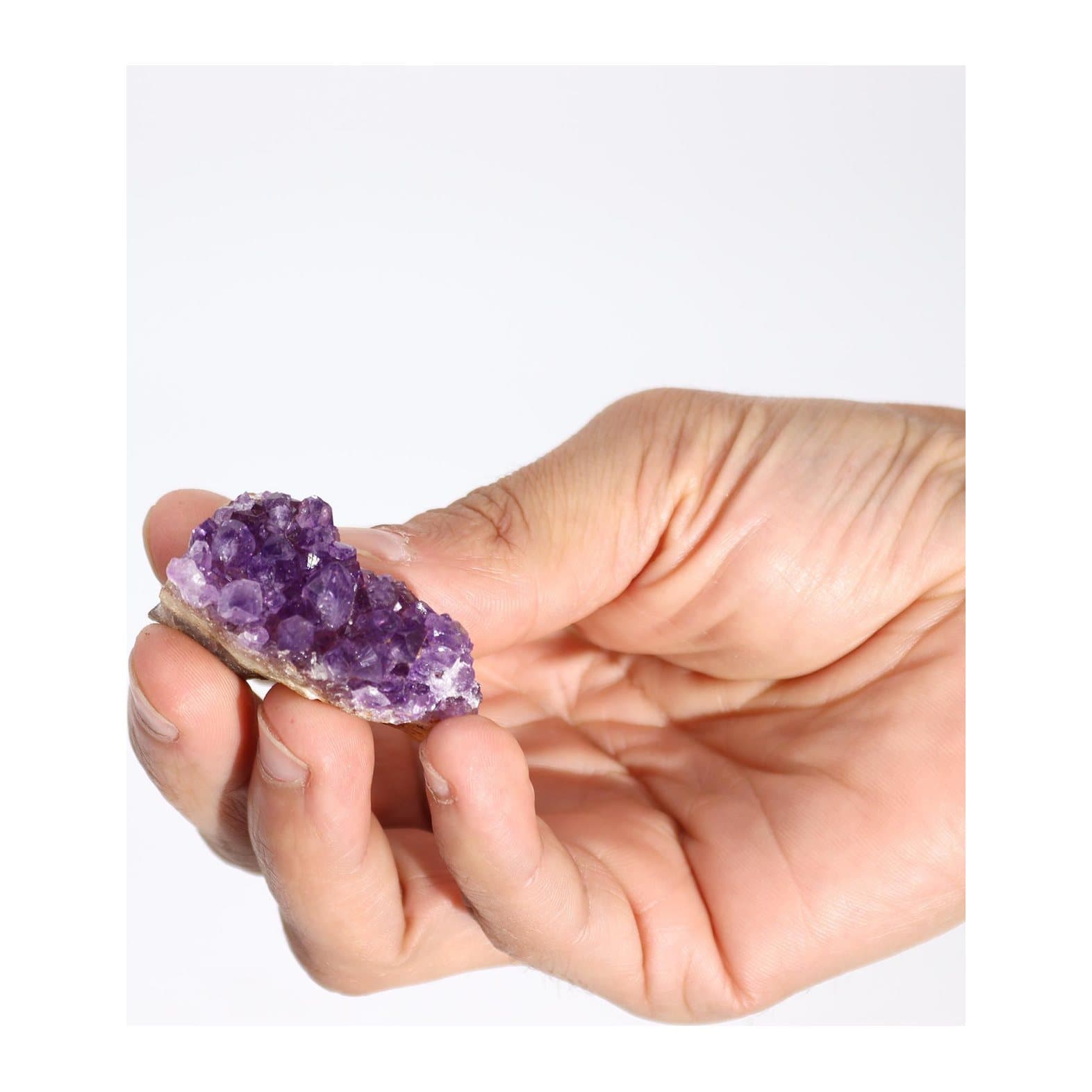
Skip water for clusters and geodes. The matrix, the rough rock base the crystals grow from, can crumble, stain or hold damp. Our Small Natural Amethyst Cluster 3-8 cm (£6.49) is a fine example: cleanse it with sound or moonlight, and dust it with a soft, dry brush.
Care is just as easy:
- Keep it out of sunny windows. Amethyst fades in long direct sunlight, so a shady shelf keeps that purple rich.
- Store pieces apart. At hardness 7, amethyst can still chip when stones knock together, so wrap jewellery or use a soft pouch.
- Avoid harsh cleaners. Plain water on tumbled stones is all you need.
Look after it like this and the colour stays deep for years.
 2 designs
Which crystals pair well with amethyst?
Amethyst pairs well with clear quartz, citrine, rose quartz, selenite and black obsidian. These are common pairings in crystal practice, chosen for colour and for their place in crystal lore.
- Clear quartz: the same mineral as amethyst, minus the purple. Together they make a clean, bright display.
- Citrine: yellow quartz. Much citrine on sale is amethyst that has been heated until it turns gold, and ametrine is a natural stone that shows purple and gold in one crystal.
- Rose quartz: pink quartz, traditionally associated with love in crystal lore. Purple and pink sit beautifully side by side.
- Selenite: a soft, white form of gypsum. Keep it dry, as water damages it.
- Black obsidian: a natural volcanic glass, often set next to amethyst on altars for strong contrast.
Want a pairing in a single stone? Chevron amethyst already mixes purple amethyst with white quartz in V-shaped bands, so the tumble stones above give you two quartz colours in every piece.
For a crown chakra set, many people group amethyst with clear quartz and selenite, as yoga tradition links violet and white with Sahasrara. For a mixed altar, a cluster at the centre with tumble stones around it is an easy layout.
Ready to build your set? Browse our crystals and pick your amethyst point, cluster or geode today, with tracked UK delivery and 14-day returns.