Key points
- Obsidian is natural volcanic glass that forms when lava cools too fast to form crystals.
- Geologists class obsidian as a mineraloid, not a true crystal.
- In crystal lore, obsidian is traditionally associated with grounding, protection and reflection.
- Obsidian was used for Stone Age blades and for mirrors in Aztec Mexico.
- It rates about 5 to 5.5 on the Mohs scale, so it can scratch and chip.
What does obsidian mean?
Obsidian means two things. In geology, it is volcanic glass. In crystal lore, it is a stone of grounding, protection and reflection, traditionally called the 'truth stone'.
Browse our crystals to see that glassy black shine up close. Pick from obsidian points, tumble stones, wands, pendulums and sets, each with its size on the page, and no two pieces quite the same.
Is obsidian a crystal? Not strictly. Obsidian forms when lava cools too fast for crystals to grow, so geologists call it a mineraloid. That simply means a natural solid with no regular crystal structure. Shops and collectors still file it with crystals, and so do we.
The meaning comes from a long human story:
- Stone Age people shaped obsidian into tools and blades, because it breaks to a very sharp edge.
- In Aztec Mexico, polished obsidian was made into mirrors. The god Tezcatlipoca has a name that means 'smoking mirror'.
- John Dee, adviser to Elizabeth I, owned an obsidian mirror that is now in the British Museum.
Those mirrors are why crystal lore ties obsidian to reflection and honesty. Its deep black colour and volcanic birth explain why many people see it as a grounding stone. In crystal lore it is also linked to the root chakra. In yoga tradition, a chakra (Sanskrit for 'wheel') is one of seven energy centres, and the root chakra, or Muladhara, is the first.
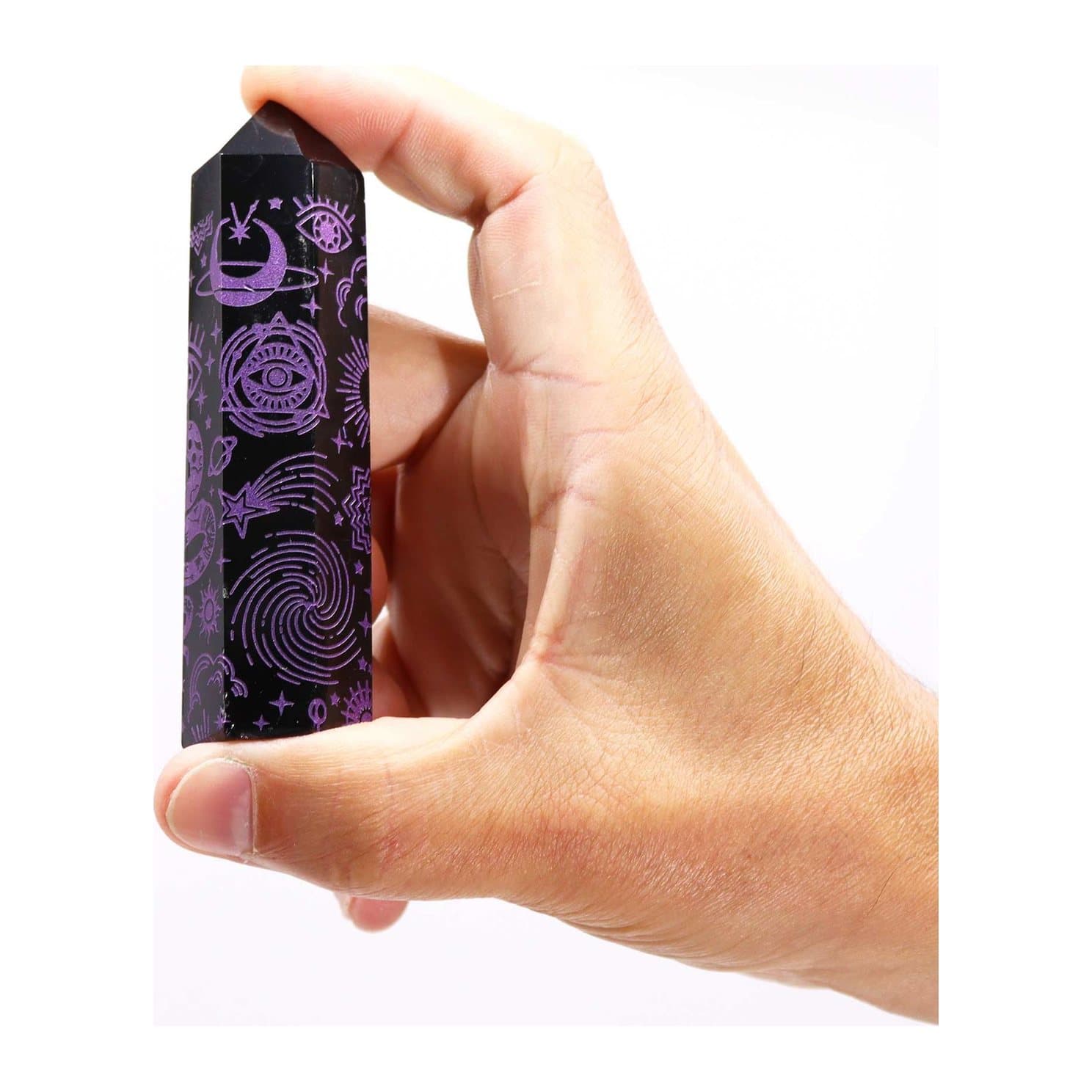
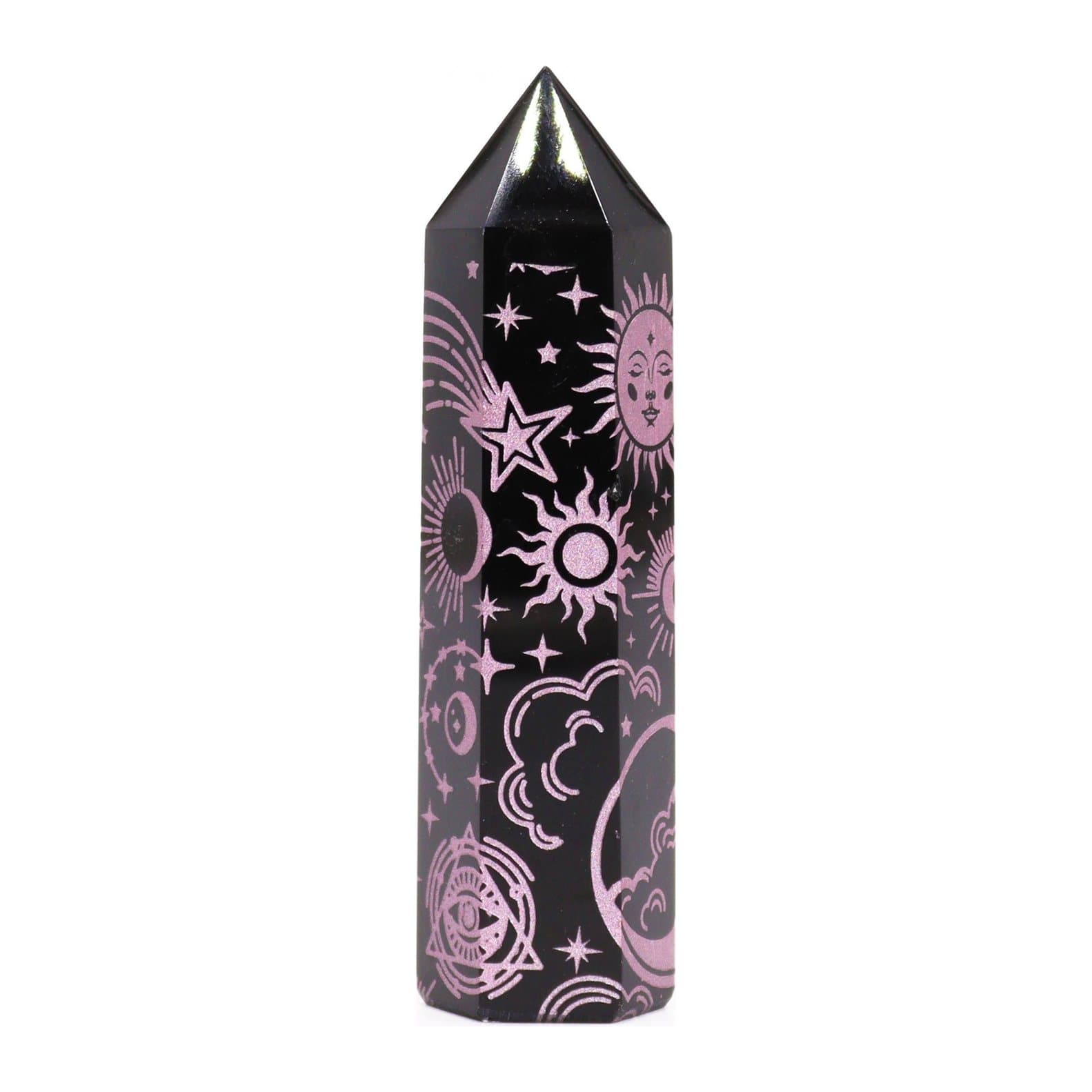
Want a statement piece? The Black Obsidian Crystal Point Mystic Story 9 cm (£13.99) carries deep purple celestial designs. If you like a softer colour, the Black Obsidian Crystal Point, Rose Pink Design (£13.99) is the same 9 cm size with a rose pink finish.
How do people use obsidian?
People use obsidian in four main ways. They keep it nearby, hold it in meditation, gaze into it, or use it in ritual tools such as pendulums and wands. You don't need any special skill for any of them.
- Keeping it close. Many people keep a tumble stone in a pocket, or a point on a desk or altar, as a reminder of what the stone stands for in crystal lore.
- Meditation. Obsidian is a stone traditionally used in meditation. Some people simply hold a smooth piece and focus on its weight and shine.
- Scrying. This is the old practice of gazing into a dark, shiny surface to look for images. It is why obsidian mirrors like John Dee's were so valued.
- Dowsing. A pendulum is a small weight on a chain. People hold it still and watch which way it swings when they ask a yes-or-no question. It is a folk practice, not a science.
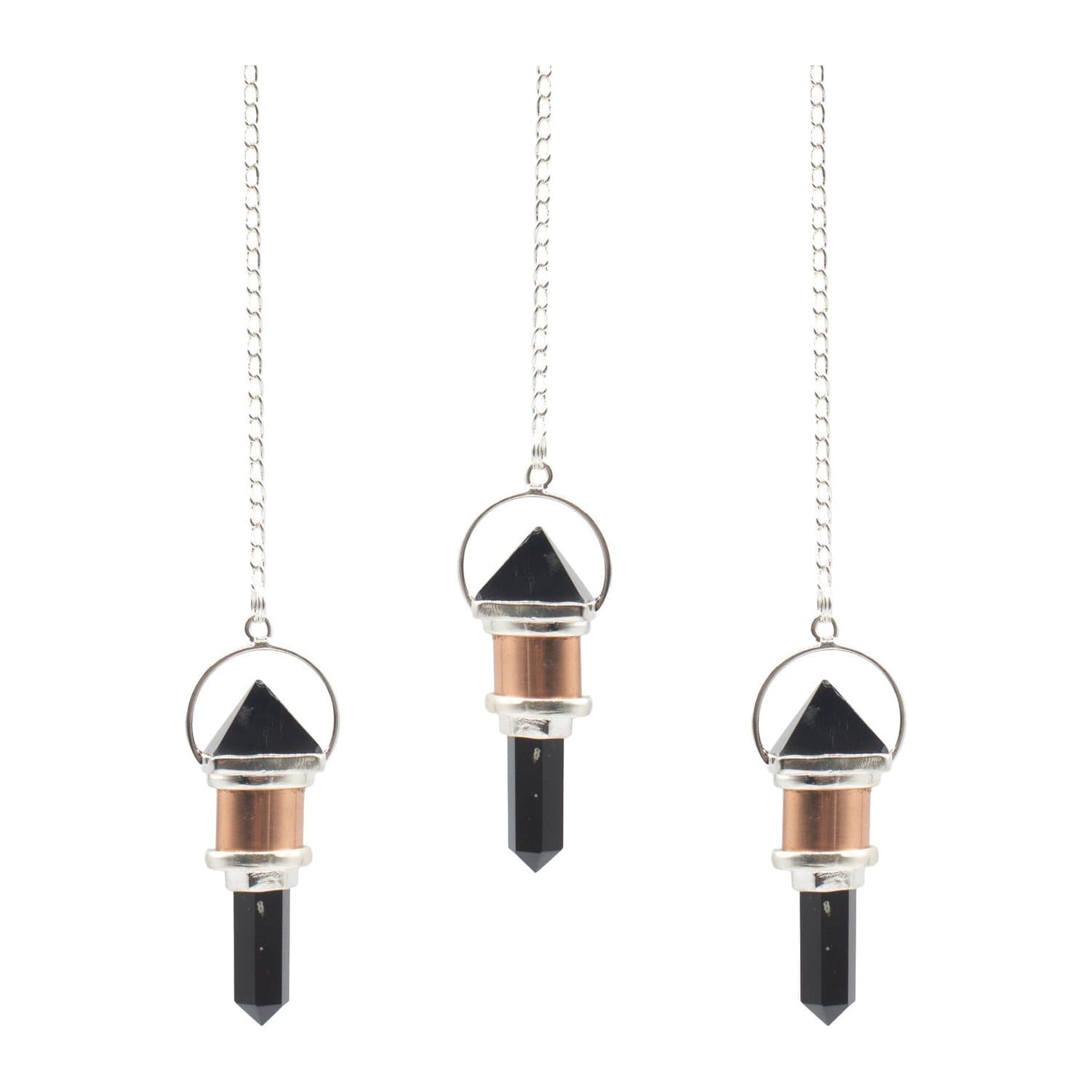
For dowsing, the Night Watcher Obsidian Copper Pendulum (£17.99) pairs obsidian with a copper-tone pyramid top and a pointed crystal base. At 25 x 3 cm, it is a classic pendulum length.
For ritual and intention setting, the Black Obsidian Crystal Wand with Pouch (£13.99) sets a genuine obsidian crystal into a resin wand. It comes in a windowed box with a pouch for storage. For a slimmer option, the thin wand weighs just 83 g.
Intention setting just means stating a clear aim, out loud or on paper, at the start of a ritual. Many people hold a piece of obsidian while they do it. Pick the tool that fits your practice and keep it where you will see it.
 Same-day dispatch
 Same-day dispatch
Which obsidian should you choose: black, snowflake, rainbow or mahogany?
Choose by look. Black obsidian has the classic mirror shine, snowflake has white pattern, rainbow has hidden colour and mahogany is warm red-brown. All four are the same volcanic glass with different inclusions.
- Black obsidian meaning: this is the core stone of the lore, traditionally tied to grounding, protection and the 'truth stone' name.
- Snowflake obsidian meaning: black glass speckled with white cristobalite, a mineral that grows in small flower-like clusters. Many collectors choose it for the pattern alone.
- Rainbow obsidian: looks plain black until light catches it, then shows bands of colour sheen from tiny inclusions.
- Mahogany obsidian: black mixed with reddish-brown patches coloured by iron.
- Apache tear: small, rounded nodules of obsidian that often look see-through when held to the light.
- Gold and silver obsidian: black stone with a golden or silvery sheen.
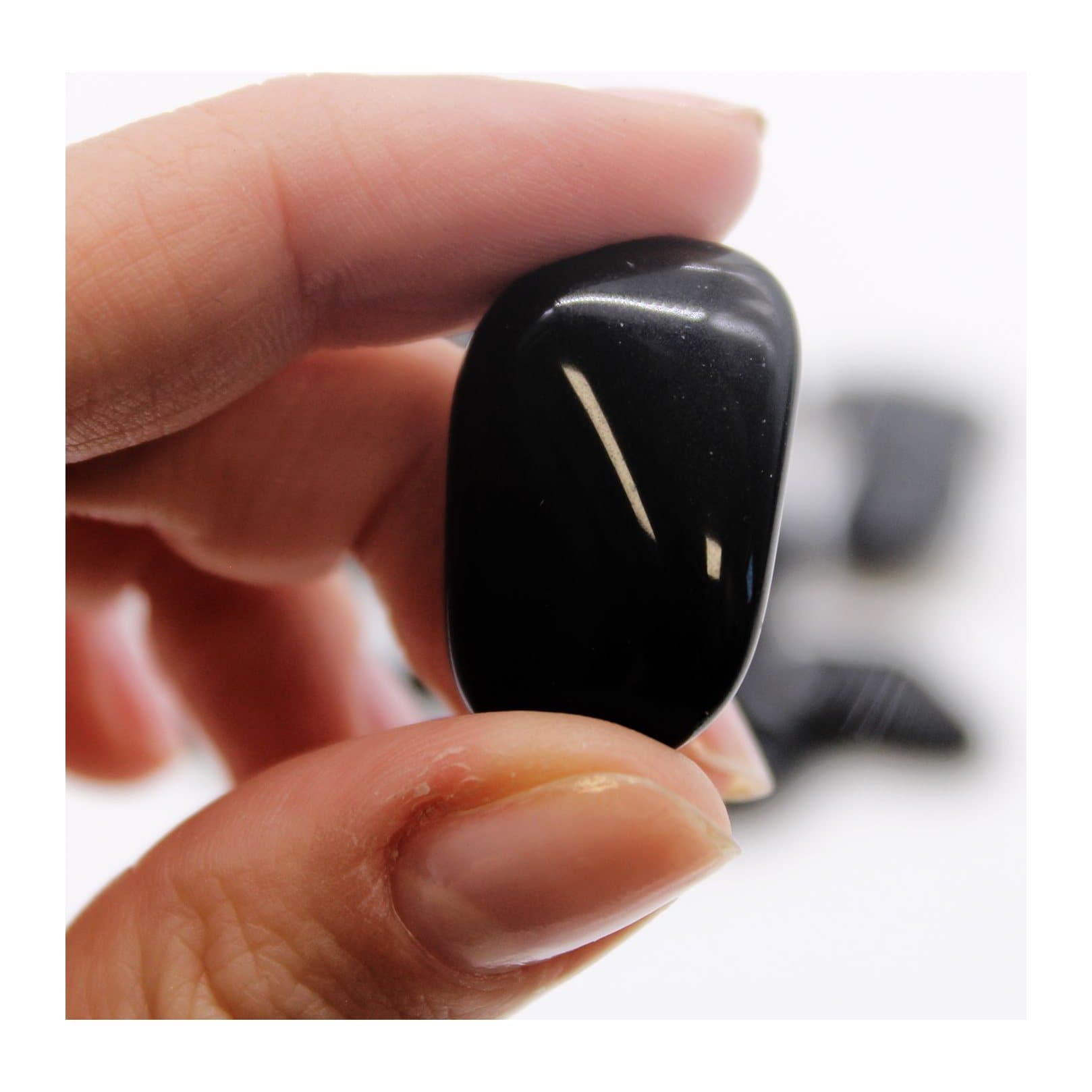
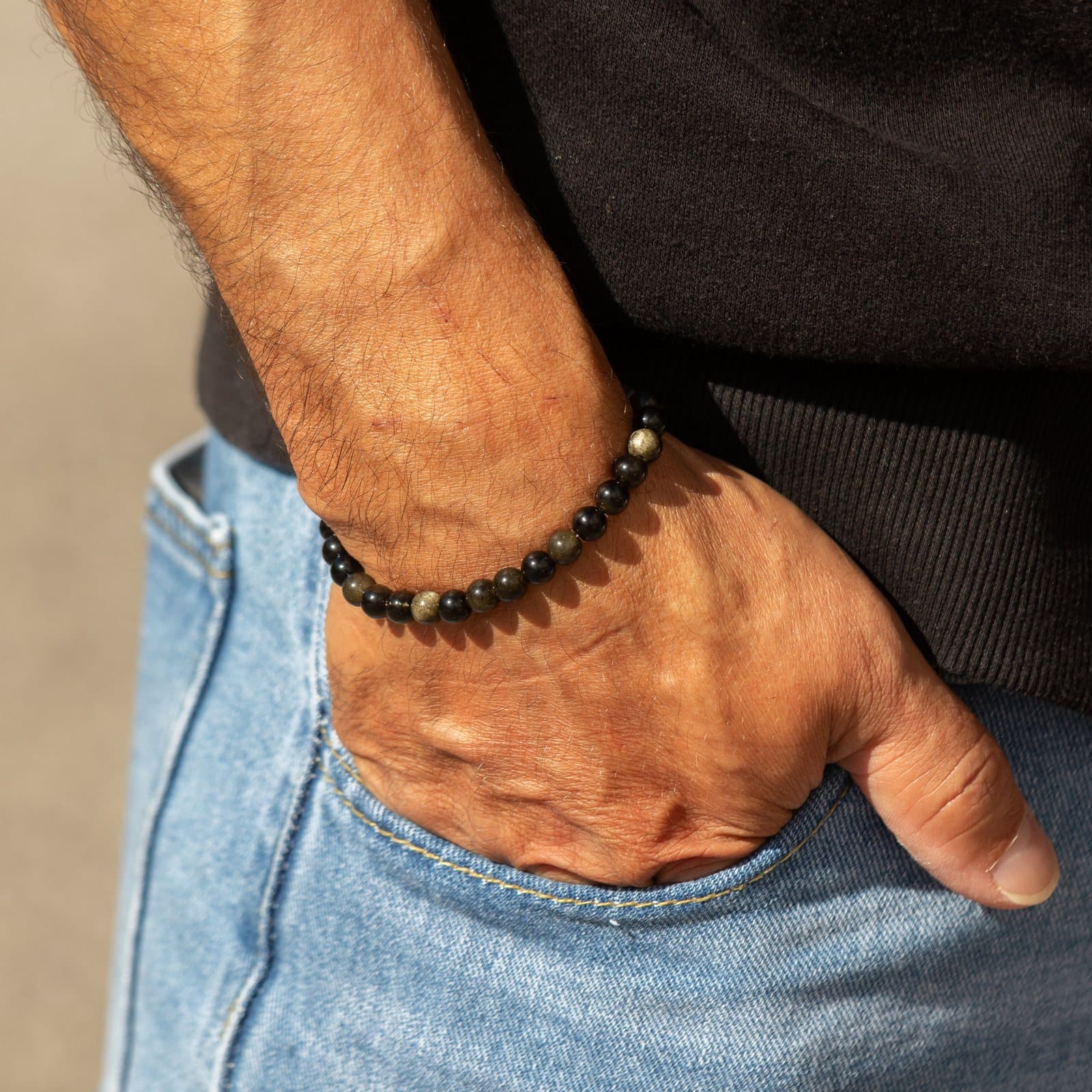
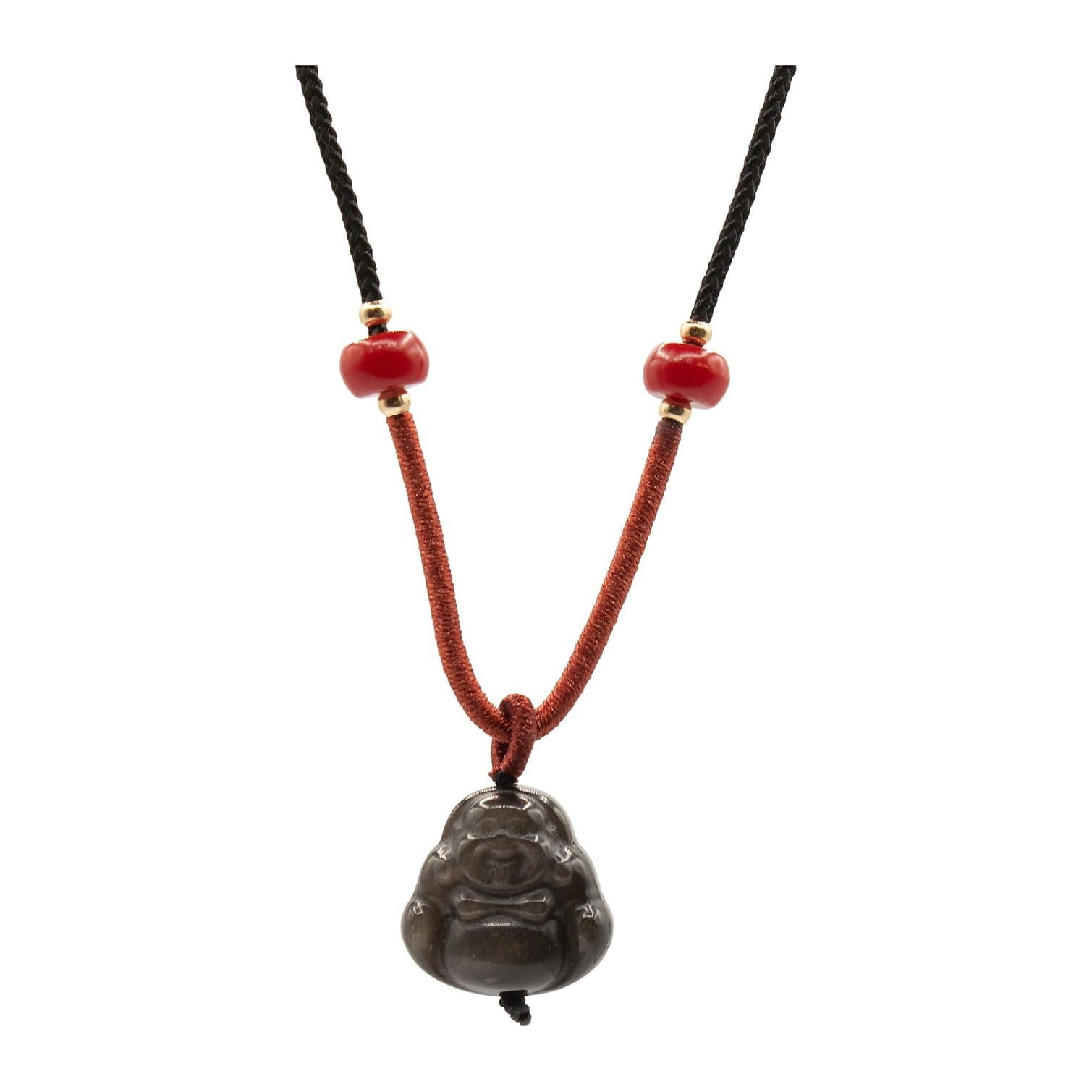
Our current range covers black, gold and silver obsidian. For collectors and ritual use, the Medium Black Obsidian Tumble Stones, Pack of 24 (£8.99) gives you plenty to place, share or keep. If you want an obsidian bracelet, the Gold Obsidian Petite Gemstone Bracelet 6 mm (£3.99) is a stretchy 17 cm fit with no clasp, sized for slimmer wrists. For a carved piece, the Silver Obsidian Buddha Pendant Necklace (£5.49) hangs on an adjustable cord.
Want more choice? Our spiritual jewellery range includes a skull charm bracelet and a butterfly necklace in black obsidian. Natural stones vary in colour and pattern from the photo, so your piece will be one of a kind.
How do you cleanse and care for obsidian?
Cleanse obsidian with smoke, moonlight or sound. Care for it with a soft cloth and gentle handling. Keep it away from salt water and long spells in strong sun.
Here, cleansing means a ritual to reset a stone, not washing it. People use three traditional methods:
- Smoke: pass the stone through the smoke of a white sage bundle or incense as part of a cleansing ritual. Use a heat-proof dish, open a window and never leave burning material alone.
- Moonlight: leave it on a windowsill overnight, often at a full moon.
- Sound: ring a bell or singing bowl near the stone for a minute or so.
You may see smoke cleansing called smudging. That word names a sacred ceremony of many Indigenous North American nations, so we simply call our own practice a cleansing ritual.
Care basics:
- Obsidian is about 5 to 5.5 on the Mohs scale, a 1 to 10 scale of mineral hardness. It is softer than quartz, so it can scratch and chip.
- Store it apart from harder stones, ideally in a pouch or soft bag.
- Wipe it with a soft, dry cloth to bring back the shine.
- Avoid salt water and long periods in direct sun.
- Raw or broken obsidian can have sharp edges. Handle it with care and keep it away from children and pets.
Bracelets need a little extra thought. Roll stretchy bracelets on and off rather than pulling them wide, and take them off before washing up or swimming. Handle your pieces gently and store them well, and they will stay glossy.
Which crystals pair well with obsidian?
Obsidian pairs well with clear quartz and red jasper, a classic trio in crystal lore. Black, clear and red look striking together, and each stone has its own place in tradition.
- Clear quartz is a colourless stone that crystal lore often places alongside other stones in sets and grids.
- Red jasper is a warm red stone that crystal lore ties, like obsidian, to grounding and the root chakra.
- Amethyst is a purple quartz that many people keep for meditation.
- Gold or silver obsidian sits well next to black obsidian if you like a set from one family.
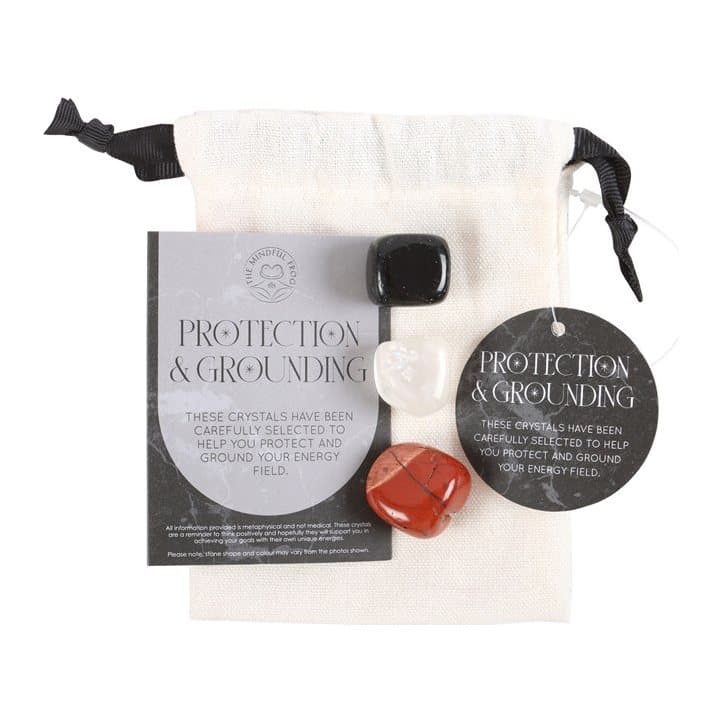
The easiest way to start is the Black Obsidian, Clear Quartz & Red Jasper Set (£6.49). You get all three stones in a drawstring bag with an insert card, 50 g in total. It suits new collectors and makes a neat gift.
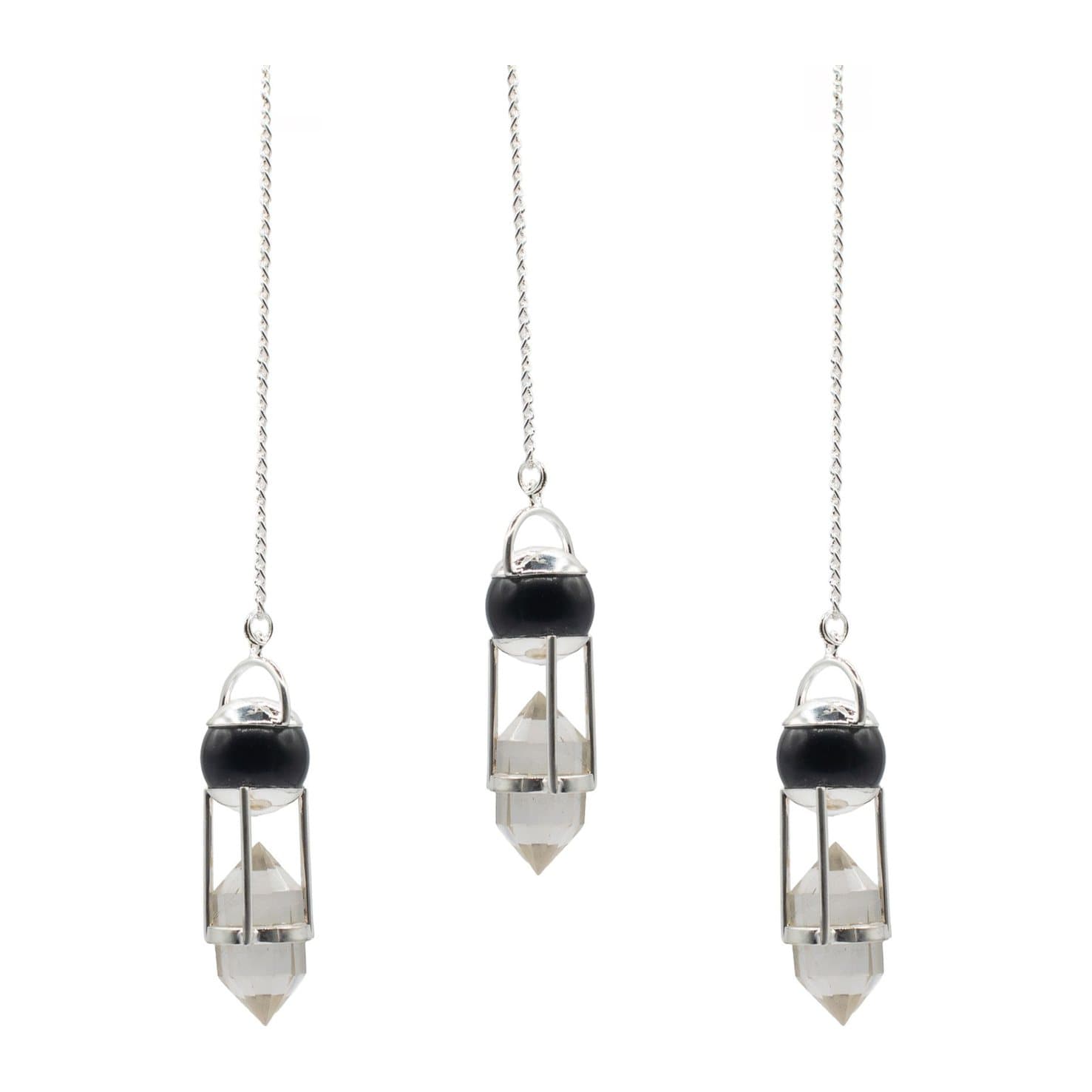
For two stones in one dowsing tool, the Obsidian and Clear Quartz Double Pendulum (£17.99) pairs a polished obsidian globe with a clear quartz double-terminated point. Double-terminated means the crystal has a point at each end.
Want to read more? Our guides to amethyst meaning and chakra meaning go further into these traditions.
Every order ships with tracked UK delivery by Royal Mail or courier, and you have 14-day returns. Ready to choose? Browse our crystals and find the obsidian that suits you.
 Same-day dispatch