
Key points
- The hamsa is an open hand with five fingers. The name means "five" in Arabic and Hebrew.
- It is called the Hand of Fatima in Islamic tradition and the Hand of Miriam in Jewish tradition.
- Traditionally, a hand pointing up is read as protection and blessing, and a hand pointing down as abundance.
- Wear it as a bracelet, necklace or earring, or display it as a wall hanging, tray or incense holder.
- Wear it with respect: it is a living symbol, not a lucky charm.
What does the hamsa mean?
The hamsa is an open hand symbol that is traditionally seen as a sign of protection and blessing. It has five fingers, and the name simply means "five". Many people wear or display it as a reminder of faith, family and care.
You will meet it under several names:
- Hand of Fatima: the name used in Islamic tradition.
- Hand of Miriam: the name used in Jewish tradition.
- Khamsa: the Arabic word, often seen across North Africa.
It is a living symbol. It matters to many Muslim and Jewish families and across North African culture, so we show it respect. We don't sell it as a lucky charm. We sell it for what it is: a meaningful symbol, made into jewellery and décor.
Want to wear one? Browse our spiritual jewellery for bracelets, necklaces and earrings. Want one for the wall? Our feng shui and home range has wall hangings, trays and boxes. Prefer scent? You will find hamsa holders in incense.
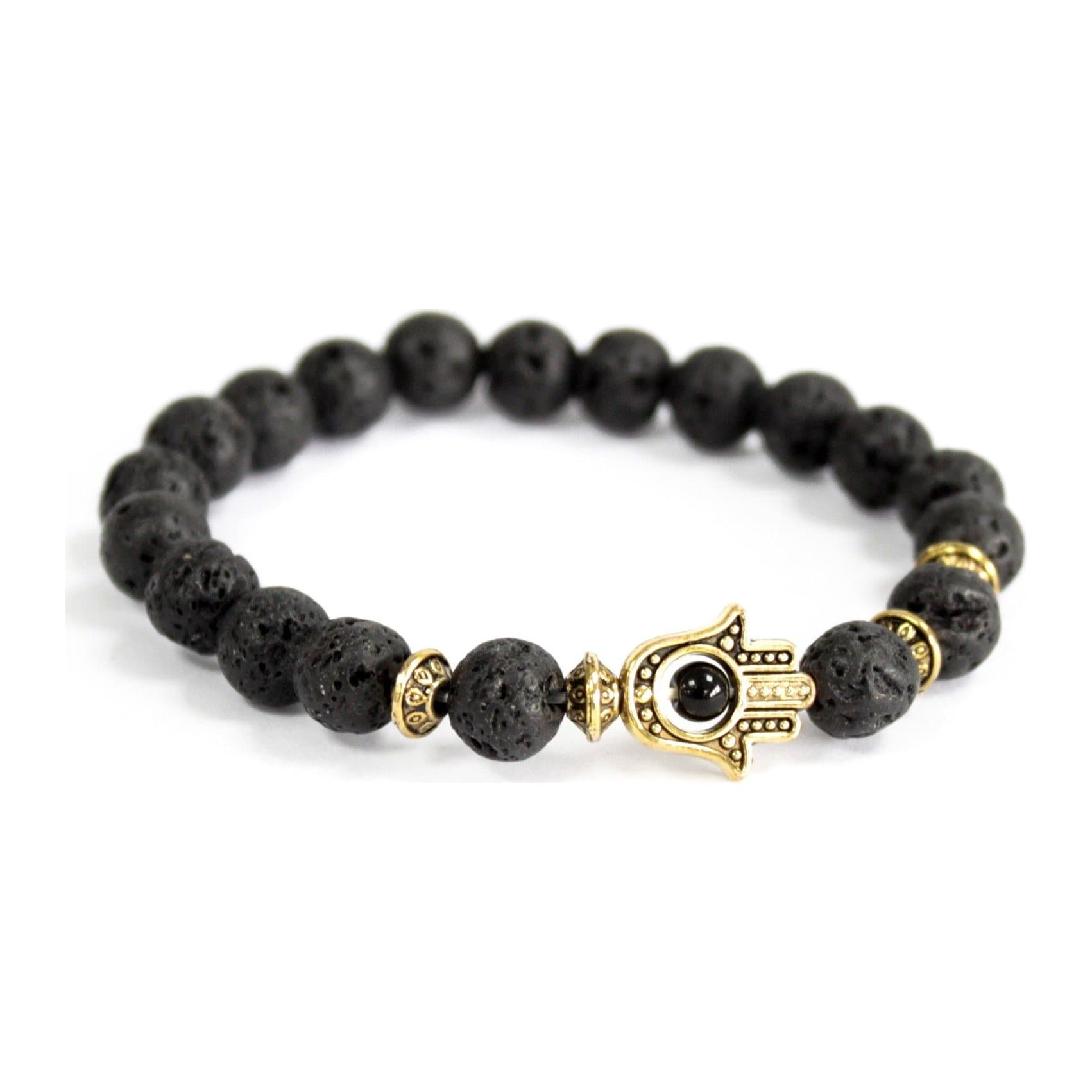
New to the symbol? Start with a necklace or bracelet. They are the easiest way to carry the design every day, and the two below sit at friendly prices.

Where does the hamsa come from?
The hamsa comes from the Middle East and North Africa, and its use is far older than any one faith. Some historians point to ancient Carthage and Mesopotamia as early homes of hand symbols like it. Nobody can pin down one exact starting point, so we won't pretend to.
What we do know is how it lives today:
- In Islamic tradition it is called the Hand of Fatima, after Fatima, the daughter of the Prophet Muhammad. Some people link the five fingers to the five pillars of Islam.
- In Jewish tradition it is called the Hand of Miriam, after the sister of Moses and Aaron. Some people link the five fingers to the five books of the Torah. The Hebrew word for five is hamesh.
- Across North Africa the khamsa has long appeared on doors, walls, textiles and jewellery.
The word itself is the clue. Khamsa in Arabic and hamesh in Hebrew both mean "five". That is why the number five and the five-fingered hand go together.
So when someone asks where the hamsa is from, the honest answer is: several communities, over many centuries, each with its own meaning for it. That shared history is part of why the symbol is so loved.
Hamsa up or hamsa down: what do the open hand and the eye mean?
Hamsa up or down is a question of reading, not rules. Some people say a hand pointing up is traditionally seen as protection and blessing, like a raised palm saying "stop". Some people say a hand pointing down is traditionally seen as abundance, like a hand pouring out gifts. These are popular modern readings. Both ways are common, and neither is wrong.
So pick the direction that speaks to you. Hang it up, hang it down, or put it flat on a shelf. It is your space.
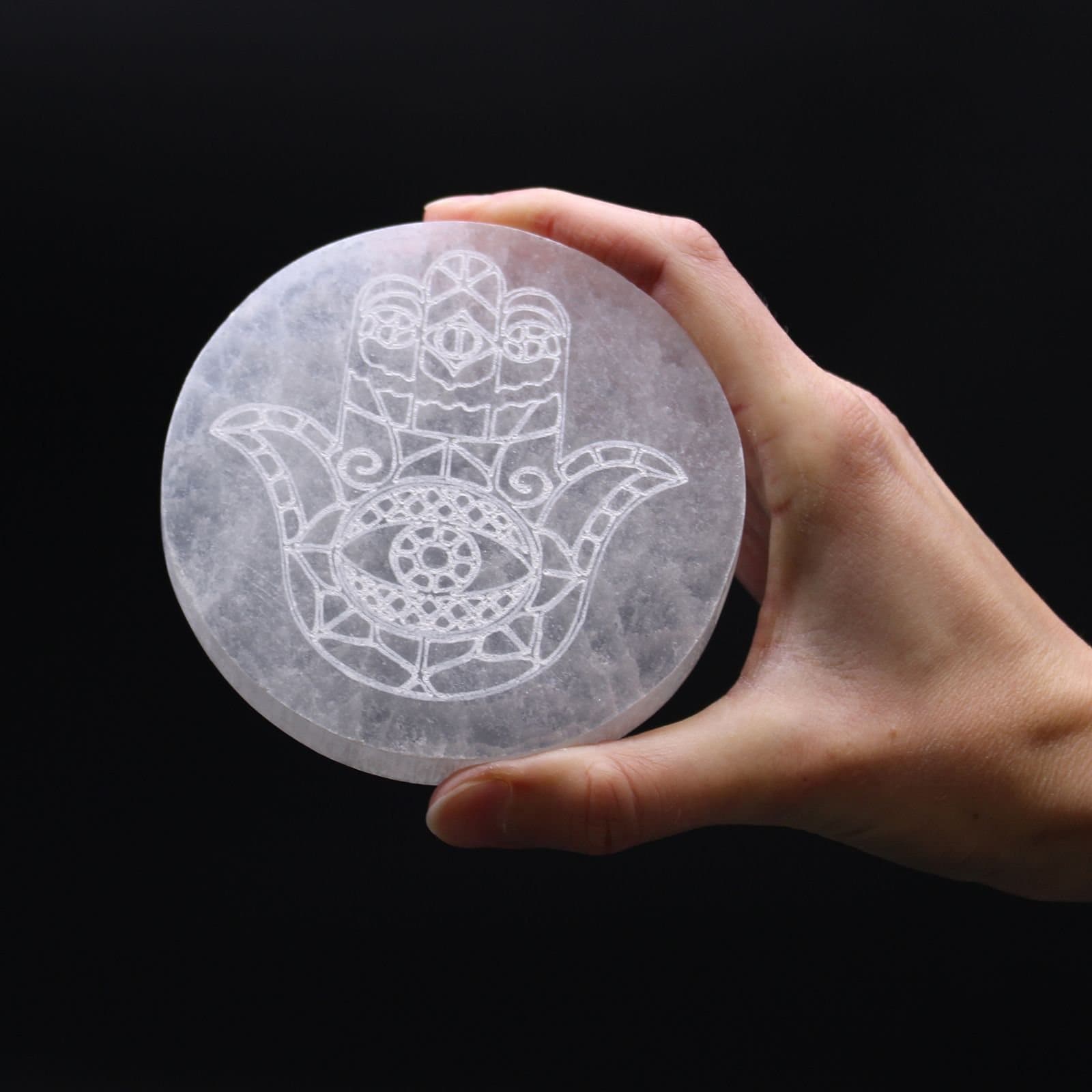
The eye in the palm is the other thing people ask about. In folk tradition, the eye is a sign meant to watch over the wearer and turn away the envious glance known as the evil eye. We cover that idea in full in our evil eye meaning guide, so we won't repeat it here. In short, the hamsa and the eye often appear together because both are traditional symbols of protection.
Not every hamsa has an eye. Some are plain. Some carry flowers, fish or patterns instead. Fish, for example, are a common decoration in North African designs.
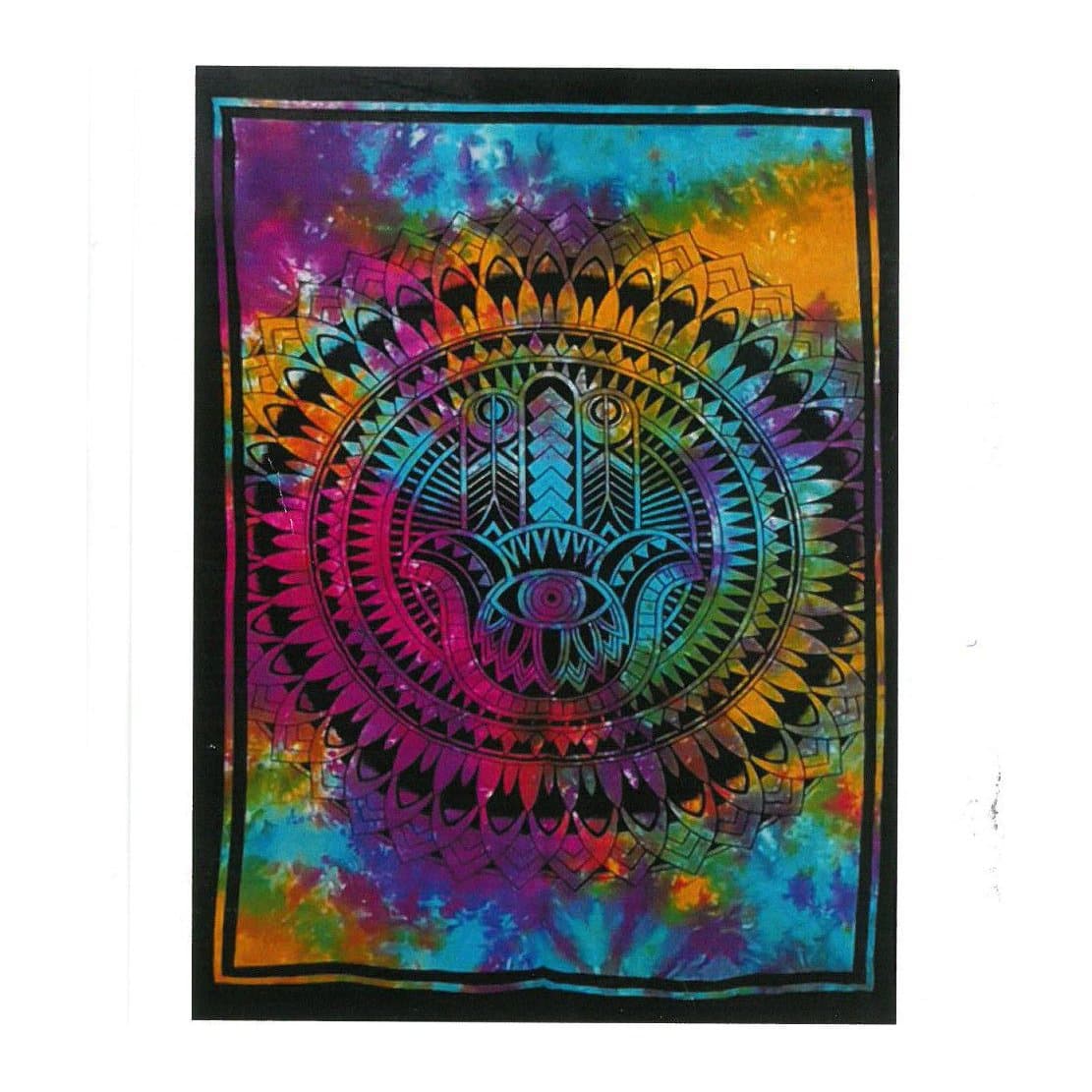
For a bold up-or-down display at home, these two wall pieces do the job.
 7 designs
 2 designs
How do people use a hamsa?
People use a hamsa as jewellery and as home décor. It works in both because the shape is simple and easy to read.
To wear:
- Bracelets: easy, everyday and good for beginners.
- Necklaces: the hamsa sits near the heart, which many people like.
- Earrings: a small, neat way to carry the symbol.
For the home:
- Wall hangings: many people hang a hamsa by the front door or in the living room. In folk tradition, a hamsa near an entrance is a sign of a welcoming, blessed home.
- Trays and boxes: handy for keys, rings or a few small crystals.
- Incense holders: a hamsa that does a job as well as looking good.
There is no right place. Some people keep a small hamsa on a desk. Others put one over the bed or on an altar. If you are building a sacred corner, our guide to setting up an altar shows you how.
Here is a smart trio: one piece to wear, one for a table, one for the wall.


How do I choose a hamsa?
Choose a hamsa by deciding where it will live, then matching the material and size to that spot. Four quick questions sort it out.
1. Jewellery or home? Jewellery is personal and travels with you. Home pieces make a statement and stay put. Many people end up with one of each.
2. What material? Beaded gemstone and lava stone pieces feel earthy and casual. Metal pieces look sharper and smarter. Wood and cotton suit walls and shelves. Pick the look you will actually use.
3. What size? A small hamsa is subtle. A big one is a focal point. For a necklace, check the pendant size in the listing. For a wall, go larger than you think. Small pieces vanish on a big wall.
4. What budget? Bracelets start from a few pounds. Necklaces, trays and wall art sit in the middle. Metal earrings and the wooden wall shelf cost more. You don't need to spend big to get a lovely piece.
If you want a pendant with a bit of presence, this Hand of Fatima necklace is a good pick.

How do I care for a hamsa?
Care for a hamsa by keeping it dry, storing it safely and giving it a gentle wipe. The rules depend on the material.
Jewellery
- Take it off before swimming, showering or washing up.
- Keep it away from perfume and cleaning sprays.
- Store it in a pouch or box so beads and metal don't scratch.
- Wipe with a soft, dry cloth.
Wooden pieces
- Wipe clean with a slightly damp cloth, then dry straight away.
- Keep them out of standing water and away from radiators.
Cotton wall hangings
- Follow the care label. Shake out dust now and then.
Incense holders
Safety comes first here:
- Use the holder on a flat, heatproof surface.
- Keep burning incense on the ash catcher or dish, so hot ash lands where it should.
- Never leave burning incense unattended.
- Keep it away from children, pets and anything that burns.
- Open a window so the room is well ventilated.
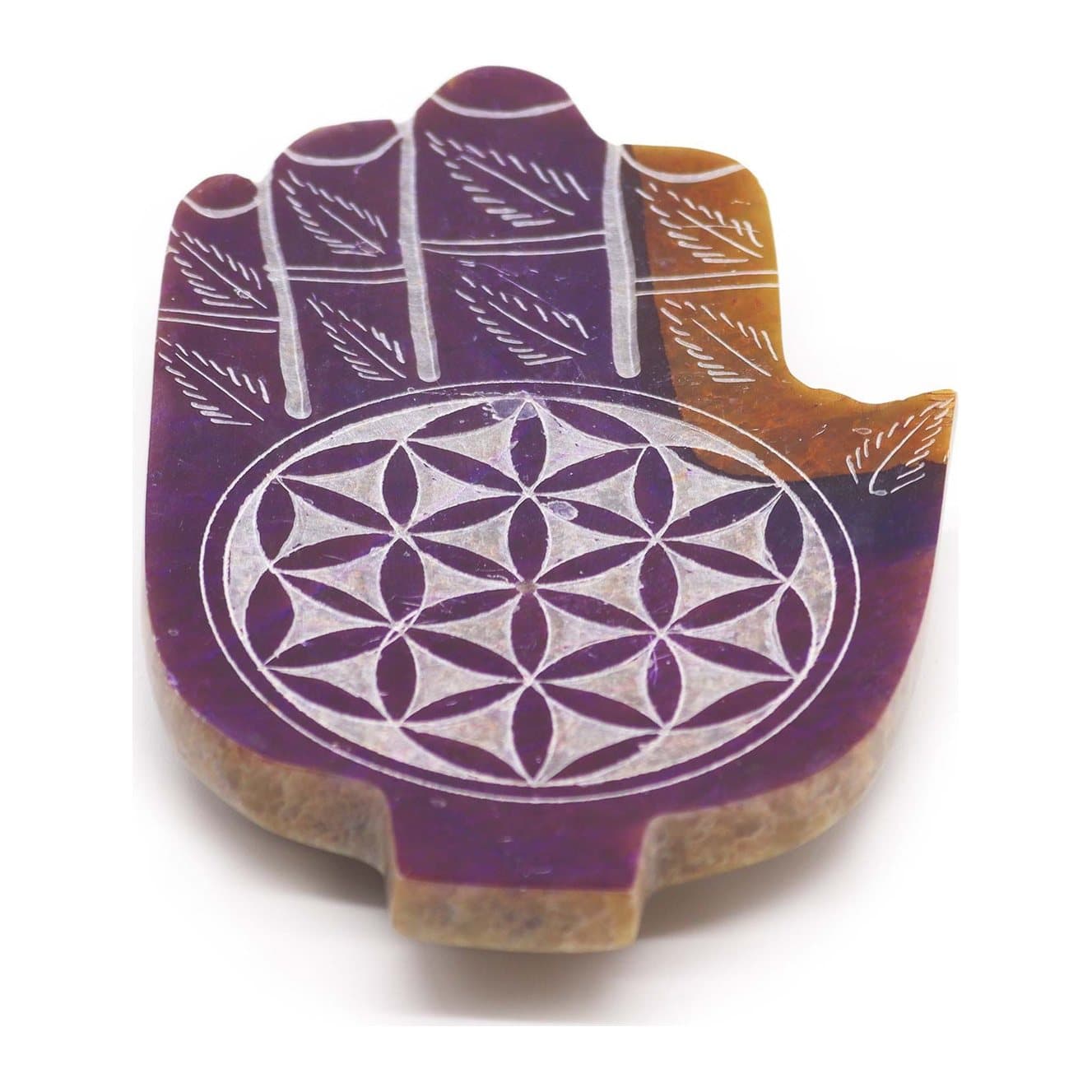
Looking for a holder? These two give you a small, neat option and a carved soapstone one.
 2 designs
Which charms and stones go with a hamsa?
The best partners for a hamsa are the evil eye, black agate, lava stone, tiger's eye and chakra beads. Each adds its own meaning, so you can build a piece that says something personal.
- Evil eye: the classic pairing. In folk tradition both are seen as symbols of protection. Read our evil eye meaning guide to see how they fit together.
- Black agate: a dark, grounded-looking stone that many people choose for its bold style and its traditional link with strength.
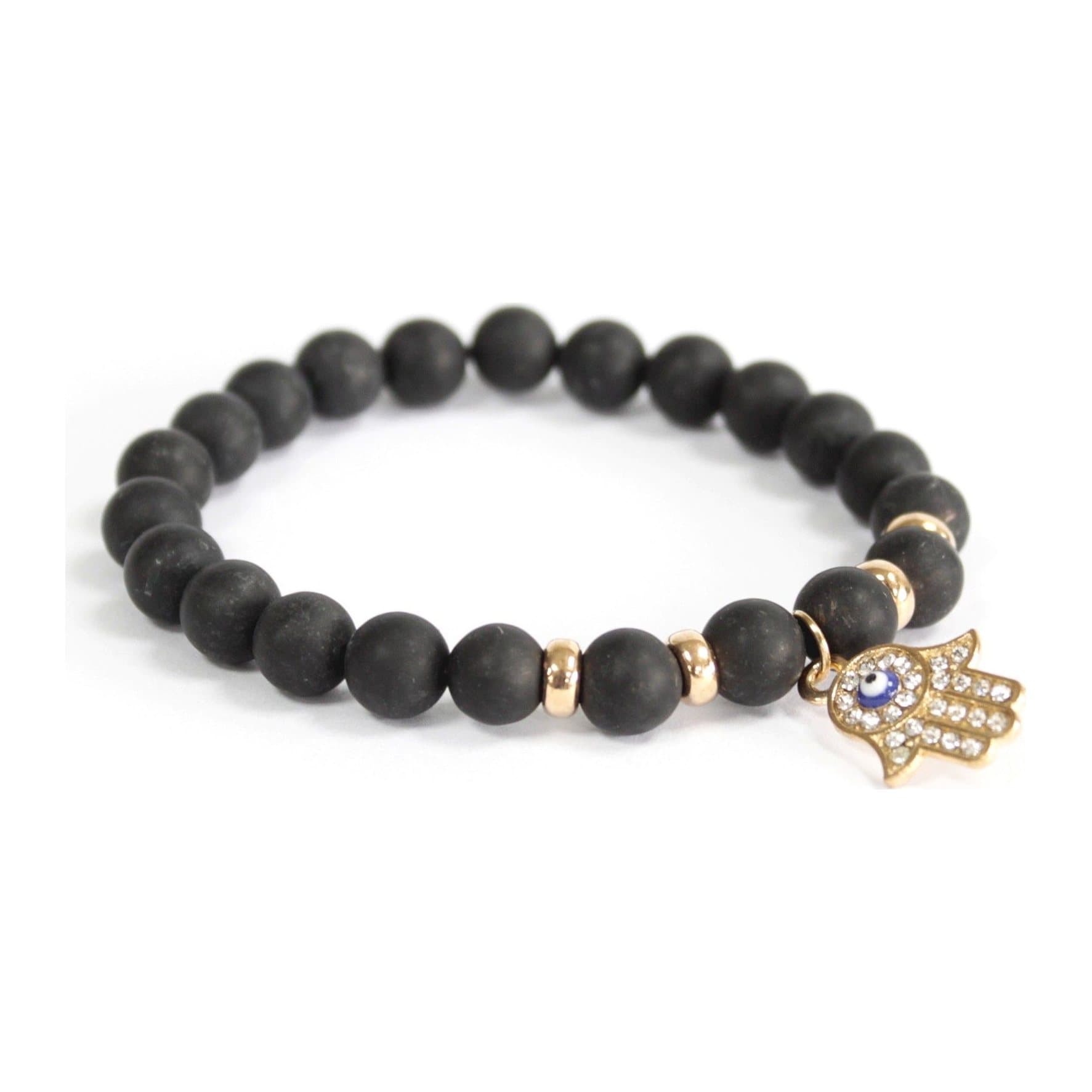
- Lava stone: a rough, black volcanic stone, popular in beaded bracelets and necklaces. It is also a favourite base for scent, if you like to add a drop of oil.
- Tiger's eye: a golden-brown stone that many people associate with courage and confidence.
- Chakra beads: seven colours, each linked in tradition to a point on the body's energy map. Our chakra meaning guide explains the colours.
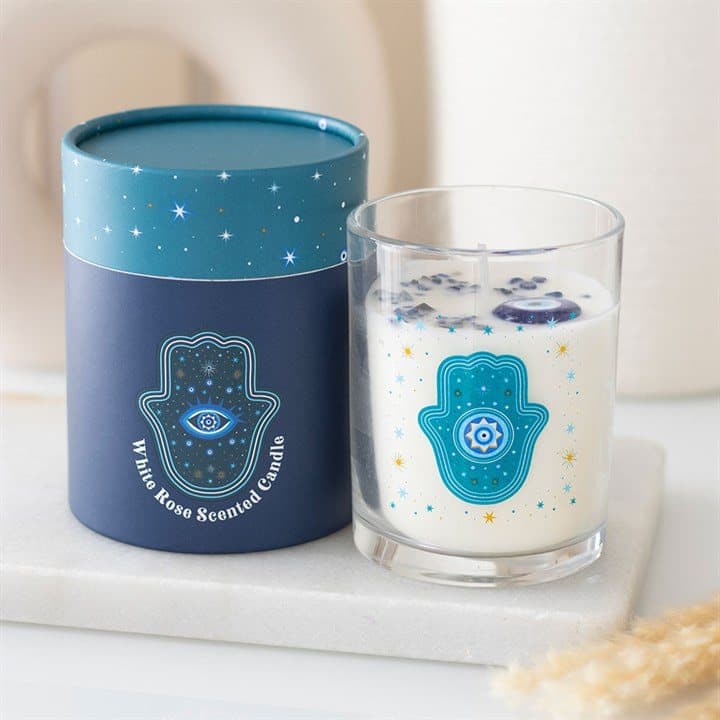
Stacking is the fun part. Wear a hamsa bracelet with a tiger's eye one. Put a hamsa charging plate on a shelf and rest your favourite crystals on it. Light a candle beside it.
Ready to choose? Start with the spiritual jewellery range, or pick a piece below. Orders placed before 12:00 noon Monday to Friday are dispatched the same day, with tracked UK delivery and 14-day returns.
 Same-day dispatch